2014 in paleontology
| |||
|---|---|---|---|
| |||
| |||
|


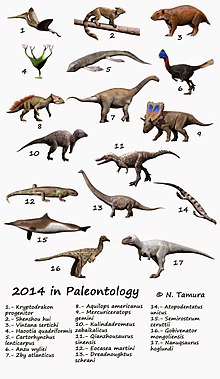
Species described in 2014
 | Wikimedia Commons has media related to 2014 in paleontology. |
Paleontology or palaeontology (from Greek: paleo, "ancient"; ontos, "being"; and logos, "knowledge") is the study of prehistoric life forms on Earth through the examination of plant and animal fossils.[1] This includes the study of body fossils, tracks (ichnites), burrows, cast-off parts, fossilised feces (coprolites), palynomorphs and chemical residues. Because humans have encountered fossils for millennia, paleontology has a long history both before and after becoming formalized as a science. This article records significant discoveries and events related to paleontology that occurred or were published in the year 2014.
Contents
1 Plants
2 Bryozoans
2.1 Newly described bryozoans
3 Cnidarians
3.1 Newly described cnidarians
4 Arthropods
5 Molluscs
6 Echinoderms
7 Conodonts
7.1 Newly described conodonts
8 Fishes
9 Amphibians
9.1 Basalmost tetrapods
9.2 Temnospondyls
9.2.1 Research
9.2.2 New taxa
9.3 Chroniosuchians
9.4 Lissamphibians
9.4.1 Research
9.4.2 New taxa
10 Ichthyopterygians
10.1 Research
10.2 New taxa
11 Sauropterygians
12 Lepidosaurs
12.1 Newly named rhynchocephalians
12.2 Newly named lizards
12.3 Newly named snakes
13 Turtles
13.1 Research
13.2 Newly named turtles
14 Archosauromorphs
14.1 Basal archosauromorphs
14.1.1 Research
14.1.2 New taxa
14.2 Pseudosuchians
14.2.1 Research
14.2.2 New taxa
14.3 Non-avian dinosaurs
14.3.1 Research
14.3.2 New taxa
14.4 Birds
14.4.1 Research
14.4.2 New taxa
14.5 Pterosaurs
14.5.1 Research
14.5.2 New taxa
15 Other reptiles
16 Synapsids
16.1 Non-mammalian synapsids
16.1.1 Research
16.1.2 New taxa
16.2 Mammals
17 Other animals
18 Other organisms
19 References
Plants
Bryozoans
Newly described bryozoans
| Name | Novelty | Status | Authors | Age | Unit | Location | Notes | Images |
|---|---|---|---|---|---|---|---|---|
Pseudokololophos[2] | Gen. et sp. nov. | Valid | Martha, Taylor, Matsuyama & Scholz | Early Cenomanian | Essen Greensand Formation |
| A cyclostome bryozoan. Genus includes new species P. radioporides. |

Cnidarians
Newly described cnidarians
| Name | Novelty | Status | Authors | Age | Unit | Location | Notes | Images |
|---|---|---|---|---|---|---|---|---|
Acanthophyllia indica[3] | Sp nov | Valid | Jain | Neogene |
| A stony coral. | ||
Acanthophyllia patellata[3] | Sp nov | Valid | Jain | Neogene |
| A stony coral. | ||
Acropora macrocalyx[4] | Sp. nov | Valid[5] | Wallace & Bosellini | Early Miocene (Burdigalian) |
| A stony coral, a species of Acropora. | ||
Acropora piedmontensis[4] | Sp. nov | Valid[5] | Wallace & Bosellini | Early Miocene (Burdigalian) |
| A stony coral, a species of Acropora. | ||
Acropora salentina[4] | Sp. nov | Valid[5] | Wallace & Bosellini | Oligocene (Chattian) |
| A stony coral, a species of Acropora. | ||
Acropora slovenica[4] | Sp. nov | Valid[5] | Wallace & Bosellini | Oligocene (Rupelian) | Gornji Grad beds |
| A stony coral, a species of Acropora. | |
Anisocoenia bhimpuraensis[3] | Sp nov | Valid | Jain | Neogene |
| A stony coral. | ||
Antillia kathiawarensis[3] | Sp nov | Valid | Jain | Neogene |
| A stony coral. | ||
Antillocyathus gopiae[3] | Sp nov | Valid | Jain | Neogene |
| A stony coral. | ||
Arctistrotion[6] | Gen. et 2 sp. et comb. nov | Valid | Fedorowski & Stevens | Carboniferous (Bashkirian) |
| A colonial coral belonging to the subclass Rugosa and the family Lithostrotionidae. The type species is Arctistrotion variabilis; genus also contains "Lithostrotionella" wahooensis Armstrong (1972) and Arctistrotion simplex. | ||
Axophyllum cozari[7] | Sp. nov | Valid | Rodríguez & Somerville | Carboniferous (Viséan) |
| A rugose coral belonging to the group Stauriida and the family Axophyllidae. | ||
Axophyllum julianaense[7] | Sp. nov | Valid | Rodríguez & Somerville | Carboniferous (Serpukhovian) |
| A rugose coral belonging to the group Stauriida and the family Axophyllidae. | ||
Axophyllum spinosum[7] | Sp. nov | Valid | Rodríguez & Somerville | Carboniferous (Serpukhovian) |
| A rugose coral belonging to the group Stauriida and the family Axophyllidae. | ||
Axophyllum spiralum[7] | Sp. nov | Valid | Rodríguez & Somerville | Carboniferous (Viséan) |
| A rugose coral belonging to the group Stauriida and the family Axophyllidae. | ||
Balanophyllia feddeni[3] | Sp nov | Valid | Jain | Neogene |
| A stony coral, a species of Balanophyllia. | ||
Cambroctoconus kyrgyzstanicus[8] | Sp. nov | Valid | Peel in Geyer et al. | Cambrian (Amgan) |
| A stem-cnidarian, a species of Cambroctoconus. | ||
Caryophyllia octamerala[3] | Sp nov | Valid | Jain | Neogene |
| A stony coral, a species of Caryophyllia. | ||
Cyathoceras miocenica[3] | Sp nov | Valid | Jain | Neogene |
| A stony coral. | ||
Cyphastrea stellata[3] | Sp nov | Valid | Jain | Neogene |
| A stony coral. | ||
Dendrophyllia gajaensis[3] | Sp nov | Valid | Jain | Neogene |
| A stony coral, a species of Dendrophyllia. | ||
Diploastrea gajaensis[3] | Sp nov | Valid | Jain | Neogene |
| A stony coral, a species of Diploastrea. | ||
Diploastrea khatumbaensis[3] | Sp nov | Valid | Jain | Neogene |
| A stony coral, a species of Diploastrea. | ||
Favia satyanarayanai[3] | Sp nov | Valid | Jain | Neogene |
| A stony coral, a species of Favia. | ||
Galaxea indica[3] | Sp nov | Valid | Jain | Neogene |
| A stony coral, a species of Galaxea. | ||
Haootia[9] | Gen. et sp. nov | Valid | Liu et al. | Late Ediacaran | Fermeuse Formation |
| A probable cnidarian, possibly related to Medusozoa. The type species is Haootia quadriformis. | |
Halysites miyazakiensis[10] | Sp. nov | Valid | Niko & Adachi | Silurian (Ludlow) | Gionyama Formation |
| A tabulate coral belonging to the order Halysitida and the family Halysitidae. | |
Leptastrea lowraliensis[3] | Sp nov | Valid | Jain | Neogene |
| A stony coral. | ||
Montastrea pandeyi[3] | Sp nov | Valid | Jain | Neogene |
| A stony coral. | ||
Morenaphyllum[7] | Gen. et 2 sp. et comb. nov | Valid | Rodríguez & Somerville | Carboniferous |
| A rugose coral belonging to the group Stauriida and the family Axophyllidae. The type species is M. antolinense; genus also includes new species M. boyerense, as well as "Carcinophyllum lonsdaleiforme" pauciseptata Bykova (1966) (raised to the rank of a distinct species). | ||
Multithecopora tobinosuensis[11] | Sp. nov | Valid | Niko, Haikawa & Fujikawa | Carboniferous (Viséan) | Akiyoshi Limestone Group |
| A tabulate coral. | |
Paraheritschioides compositus[6] | Sp. nov | Valid | Fedorowski & Stevens | Carboniferous (Bashkirian) | Wahoo Limestone |
| A colonial coral belonging to the subclass Rugosa and the family Kleopatrinidae, a species of Paraheritschioides. | |
Paraheritschioides katvalae[6] | Sp. nov | Valid | Fedorowski & Stevens | Carboniferous (Moscovian) | Saginaw Bay Formation |
| A colonial coral belonging to the subclass Rugosa and the family Kleopatrinidae, a species of Paraheritschioides. | |
Pareynia viacrucense[7] | Sp. nov | Valid | Rodríguez & Somerville | Carboniferous (Serpukhovian) |
| A rugose coral belonging to the group Stauriida and the family Axophyllidae. | ||
Sinobryon[12] | Gen. et sp. nov | Valid | Baliński, Sun & Dzik | Ordovician (early Floian) | Fenxiang Formation |
| A hydrozoan, a member of Hydroidolina. The type species is Sinobryon elongatum. | |
Thamnopora itoae[13] | Sp. nov | Valid | Niko, Ibaraki & Tazawa | Devonian |
| A tabulate coral belonging to the group Favositida and the family Pachyporidae. | ||
Thurispina[14] | Gen. et sp. nov | Valid | Weyer | Devonian (late Famennian) |
| A member of Rugosa. The type species is Thurispina jogi. | ||
Trochocyathus (Platycyathus) kaliae[3] | Sp nov | Valid | Jain | Neogene |
| A stony coral. |


Arthropods
Molluscs
Echinoderms
Conodonts
Newly described conodonts
| Name | Novelty | Status | Authors | Age | Unit | Location | Notes | Images |
|---|---|---|---|---|---|---|---|---|
Acuminatella binodosa[15] | Sp. nov | Valid | Orchard | Late Triassic | Pardonet Formation |
| A member of Gondolellidae. | |
Acuminatella constricta[15] | Sp. nov | Valid | Orchard | Late Triassic | Pardonet Formation |
| A member of Gondolellidae. | |
Acuminatella curvata[15] | Sp. nov | Valid | Orchard | Late Triassic | Pardonet Formation |
| A member of Gondolellidae. | |
Acuminatella denticulata[15] | Sp. nov | Valid | Orchard | Late Triassic | Pardonet Formation |
| A member of Gondolellidae. | |
Acuminatella? extensa[15] | Sp. nov | Valid | Orchard | Late Triassic | Pardonet Formation |
| A member of Gondolellidae. | |
Acuminatella longicarinata[15] | Sp. nov | Valid | Orchard | Late Triassic | Pardonet Formation |
| A member of Gondolellidae. | |
Acuminatella? prima[15] | Sp. nov | Valid | Orchard | Late Triassic | Pardonet Formation |
| A member of Gondolellidae. | |
Acuminatella sagittale[15] | Sp. nov | Valid | Orchard | Late Triassic | Pardonet Formation |
| A member of Gondolellidae. | |
Acuminatella sinuosa[15] | Sp. nov | Valid | Orchard | Late Triassic | Pardonet Formation |
| A member of Gondolellidae. | |
Belodina longxianensis minor[16] | Subsp. nov | Valid | Cai, Yuan & Wu | Late Ordovician | Lianglitag Formation |
| A subspecies of Belodina longxianensis. | |
Carnepigondolella anitae[15] | Sp. nov | Valid | Orchard | Late Triassic | Ludington Formation |
| A member of Gondolellidae. | |
Carnepigondolella gibsoni[15] | Sp. nov | Valid | Orchard | Late Triassic | Ludington Formation |
| A member of Gondolellidae. | |
Carnepigondolella milanae[15] | Sp. nov | Valid | Orchard | Late Triassic | Pardonet Formation |
| A member of Gondolellidae. | |
Carnepigondolella postsamueli[15] | Sp. nov | Valid | Orchard | Late Triassic | Pardonet Formation |
| A member of Gondolellidae. | |
Carnepigondolella spenceri[15] | Sp. nov | Valid | Orchard | Late Triassic | Pardonet Formation |
| A member of Gondolellidae. | |
Furnishina holmi[17] | Sp. nov | Valid | Bagnoli & Stouge | Cambrian (late Furongian) | Alum Shale Formation |
| A species of Furnishina. | |
Gobduntaulepis[18] | Nom. nov | Valid | Doweld | Early Ordovician |
| A replacement name for Acantholepis Pianovskij in Pianovskij, Pianovskaja & Aleksandrova, 1989 (preoccupied). | ||
Hindeodus microdentatus[19] | Sp. nov | Valid | Wu et al. | Permian–Triassic boundary |
| A species of Hindeodus. | ||
Icriodella rhodesi[20] | Sp. nov | Valid[21] | Bergström & Ferretti | Late Ordovician | Keisley Limestone |
| A species of Icriodella. | |
Kraussodontus ludingtonensis[15] | Sp. nov | Valid | Orchard | Late Triassic | Ludington Formation |
| A member of Gondolellidae. | |
Kraussodontus margaretae[15] | Sp. nov | Valid | Orchard | Late Triassic | Pardonet Formation |
| A member of Gondolellidae. | |
Kraussodontus roberti[15] | Sp. nov | Valid | Orchard | Late Triassic | Pardonet Formation |
| A member of Gondolellidae. | |
Kraussodontus rosiae[15] | Sp. nov | Valid | Orchard | Late Triassic | Pardonet Formation |
| A member of Gondolellidae. | |
Kraussodontus urbanae[15] | Sp. nov | Valid | Orchard | Late Triassic | Pardonet Formation |
| A member of Gondolellidae. | |
Kraussodontus vancouverense[15] | Sp. nov | Valid | Orchard | Late Triassic | Pardonet Formation |
| A member of Gondolellidae. | |
Kraussodontus wendae[15] | Sp. nov | Valid | Orchard | Late Triassic | Pardonet Formation |
| A member of Gondolellidae. | |
Metapolygnathus dylani[15] | Sp. nov | Valid | Orchard | Late Triassic | Pardonet Formation |
| A member of Gondolellidae. | |
Neogondolella prediscreta[19] | Sp. nov | Valid | Wu et al. | Earliest Triassic |
| A species of Neogondolella. | ||
Norigondolella norica[15] | Sp. nov | Valid | Orchard | Late Triassic | Pardonet Formation |
| A member of Gondolellidae. | |
Parafurnishius[22] | Gen. et sp. nov | Valid | Yang et al. | Early Triassic (Induan) | Feixianguan Formation |
| A member of Ellisoniidae. The type species is Parafurnishius xuanhanensis. | |
Parapetella beattyi[15] | Sp. nov | Valid | Orchard | Late Triassic | Pardonet Formation |
| A member of Gondolellidae. | |
Parapetella broatchae[15] | Sp. nov | Valid | Orchard | Late Triassic | Pardonet Formation |
| A member of Gondolellidae. | |
Parapetella clareae[15] | Sp. nov | Valid | Orchard | Late Triassic | Pardonet Formation |
| A member of Gondolellidae. | |
Parapetella columbiense[15] | Sp. nov | Valid | Orchard | Late Triassic | Pardonet Formation |
| A member of Gondolellidae. | |
Parapetella cordillerense[15] | Sp. nov | Valid | Orchard | Late Triassic | Pardonet Formation |
| A member of Gondolellidae. | |
Parapetella destinae[15] | Sp. nov | Valid | Orchard | Late Triassic | Pardonet Formation |
| A member of Gondolellidae. | |
Parapetella elegantula[15] | Sp. nov | Valid | Orchard | Late Triassic | Pardonet Formation |
| A member of Gondolellidae. | |
Parapetella hillarae[15] | Sp. nov | Valid | Orchard | Late Triassic | Pardonet Formation |
| A member of Gondolellidae. | |
Parapetella irwini[15] | Sp. nov | Valid | Orchard | Late Triassic | Pardonet Formation |
| A member of Gondolellidae. | |
Parapetella johnpauli[15] | Sp. nov | Valid | Orchard | Late Triassic | Pardonet Formation |
| A member of Gondolellidae. | |
Parapetella lanei[15] | Sp. nov | Valid | Orchard | Late Triassic | Pardonet Formation |
| A member of Gondolellidae. | |
Parapetella posterolata[15] | Sp. nov | Valid | Orchard | Late Triassic | Pardonet Formation |
| A member of Gondolellidae. | |
Parapetella prominens angulare[15] | Subsp. nov | Valid | Orchard | Late Triassic | Pardonet Formation |
| A member of Gondolellidae. | |
Parapetella prominens circulare[15] | Subsp. nov | Valid | Orchard | Late Triassic | Pardonet Formation |
| A member of Gondolellidae. | |
Parapetella prominens prominens[15] | Subsp. nov | Valid | Orchard | Late Triassic | Pardonet Formation |
| A member of Gondolellidae. | |
Parapetella pumilio[15] | Sp. nov | Valid | Orchard | Late Triassic | Pardonet Formation |
| A member of Gondolellidae. | |
Parapetella riteri[15] | Sp. nov | Valid | Orchard | Late Triassic | Pardonet Formation |
| A member of Gondolellidae. | |
Parapetella rubae[15] | Sp. nov | Valid | Orchard | Late Triassic | Pardonet Formation |
| A member of Gondolellidae. | |
Parapetella willifordi[15] | Sp. nov | Valid | Orchard | Late Triassic | Pardonet Formation |
| A member of Gondolellidae. | |
Polygnathus alkhovikovae[23] | Sp. nov | Valid | Baranov, Slavík & Blodgett | Devonian (early Emsian) |
| A polygnathid, a species of Polygnathus. | ||
Polygnathus aragonensis[24] | Sp. nov | Valid | Martínez-Pérez & Valenzuela-Ríos | Early Devonian | Basibé Formation |
| A polygnathid, a species of Polygnathus. | |
Polygnathus arthuri[23] | Sp. nov | Valid | Baranov, Slavík & Blodgett | Devonian (early Emsian) |
| A polygnathid, a species of Polygnathus. | ||
Polygnathus bardashevi[23] | Sp. nov | Valid | Baranov, Slavík & Blodgett | Devonian (early Emsian) |
| A polygnathid, a species of Polygnathus. | ||
Polygnathus carlsi[24] | Sp. nov | Valid | Martínez-Pérez & Valenzuela-Ríos | Early Devonian | Basibé Formation |
| A polygnathid, a species of Polygnathus. | |
Polygnathus communis longanensis[25] | Subsp. nov | Valid | Qie et al. | Carboniferous (latest Tournaisian) | Long’an Formation |
| A polygnathid, a subspecies of Polygnathus communis. | |
Polygnathus dujieensis[25] | Sp. nov | Valid | Qie et al. | Carboniferous (latest Tournaisian) | Long’an Formation |
| A polygnathid, a species of Polygnathus. | |
Polygnathus ivanowskyii[23] | Sp. nov | Valid | Baranov, Slavík & Blodgett | Devonian (early Emsian) |
| A polygnathid, a species of Polygnathus. | ||
Polygnathus karsteni[23] | Sp. nov | Valid | Baranov, Slavík & Blodgett | Devonian (early Emsian) |
| A polygnathid, a species of Polygnathus. | ||
Polygnathus lezhoevi[23] | Sp. nov | Valid | Baranov, Slavík & Blodgett | Devonian (early Emsian) |
| A polygnathid, a species of Polygnathus. | ||
Polygnathus michaelmurphyi[23] | Sp. nov | Valid | Baranov, Slavík & Blodgett | Devonian (early Emsian) |
| A polygnathid, a species of Polygnathus. | ||
Polygnathus ramoni[24] | Sp. nov | Valid | Martínez-Pérez & Valenzuela-Ríos | Early Devonian | Basibé Formation |
| A polygnathid, a species of Polygnathus. | |
Polygnathus settedabanicus[23] | Sp. nov | Valid | Baranov, Slavík & Blodgett | Devonian (early Emsian) |
| A polygnathid, a species of Polygnathus. | ||
Polygnathus yakutensis[23] | Sp. nov | Valid | Baranov, Slavík & Blodgett | Devonian (early Emsian) |
| A polygnathid, a species of Polygnathus. | ||
Primatella bifida[15] | Sp. nov | Valid | Orchard | Late Triassic | Pardonet Formation |
| A member of Gondolellidae. | |
Primatella circulare[15] | Sp. nov | Valid | Orchard | Late Triassic | Pardonet Formation |
| A member of Gondolellidae. | |
Primatella elongata[15] | Sp. nov | Valid | Orchard | Late Triassic | Pardonet Formation |
| A member of Gondolellidae. | |
Primatella mclearni[15] | Sp. nov | Valid | Orchard | Late Triassic | Pardonet Formation |
| A member of Gondolellidae. | |
Primatella oblonga[15] | Sp. nov | Valid | Orchard | Late Triassic | Pardonet Formation |
| A member of Gondolellidae. | |
Primatella ovale[15] | Sp. nov | Valid | Orchard | Late Triassic | Pardonet Formation |
| A member of Gondolellidae. | |
Primatella posteroglobosa[15] | Sp. nov | Valid | Orchard | Late Triassic | Pardonet Formation |
| A member of Gondolellidae. | |
Primatella rectangulare[15] | Sp. nov | Valid | Orchard | Late Triassic | Pardonet Formation |
| A member of Gondolellidae. | |
Primatella rhomboidale[15] | Sp. nov | Valid | Orchard | Late Triassic | Pardonet Formation |
| A member of Gondolellidae. | |
Primatella rotunda[15] | Sp. nov | Valid | Orchard | Late Triassic | Pardonet Formation |
| A member of Gondolellidae. | |
Primatella stanleyi[15] | Sp. nov | Valid | Orchard | Late Triassic | Pardonet Formation |
| A member of Gondolellidae. | |
Primatella subquadrata[15] | Sp. nov | Valid | Orchard | Late Triassic | Pardonet Formation |
| A member of Gondolellidae. | |
Primatella triangulare[15] | Sp. nov | Valid | Orchard | Late Triassic | Pardonet Formation |
| A member of Gondolellidae. | |
Primatella vanlierae[15] | Sp. nov | Valid | Orchard | Late Triassic | Pardonet Formation |
| A member of Gondolellidae. | |
Quadralella deflecta[15] | Sp. nov | Valid | Orchard | Late Triassic | Pardonet Formation |
| A member of Gondolellidae. | |
Quadralella karenae[15] | Sp. nov | Valid | Orchard | Late Triassic | Pardonet Formation |
| A member of Gondolellidae. | |
Quadralella kathleenae[15] | Sp. nov | Valid | Orchard | Late Triassic | Pardonet Formation |
| A member of Gondolellidae. | |
Quadralella mcrobertsi[15] | Sp. nov | Valid | Orchard | Late Triassic | Pardonet Formation |
| A member of Gondolellidae. | |
Quadralella pardoneti[15] | Sp. nov | Valid | Orchard | Late Triassic | Pardonet Formation |
| A member of Gondolellidae. | |
Quadralella posteroexpansa[15] | Sp. nov | Valid | Orchard | Late Triassic | Ludington Formation |
| A member of Gondolellidae. | |
Quadralella postlobata[15] | Sp. nov | Valid | Orchard | Late Triassic | Pardonet Formation |
| A member of Gondolellidae. | |
Quadralella praecommunisti curvata[15] | Subsp. nov | Valid | Orchard | Late Triassic | Pardonet Formation |
| A member of Gondolellidae. | |
Quadralella praecommunisti ornata[15] | Subsp. nov | Valid | Orchard | Late Triassic | Pardonet Formation |
| A member of Gondolellidae. | |
Quadralella roysi[15] | Sp. nov | Valid | Orchard | Late Triassic | Pardonet Formation |
| A member of Gondolellidae. | |
Quadralella sigmoidale[15] | Sp. nov | Valid | Orchard | Late Triassic | Pardonet Formation |
| A member of Gondolellidae. | |
Quadralella willistonense[15] | Sp. nov | Valid | Orchard | Late Triassic | Pardonet Formation |
| A member of Gondolellidae. | |
Siphonodella nandongensis[26] | Sp. nov | Valid | Li et al. | Early Carboniferous | Baping Formation |
| A species of Siphonodella. | |
Westergaardodina asinina[17] | Sp. nov | Valid | Bagnoli & Stouge | Cambrian (late Furongian) | Alum Shale Formation |
| A species of Westergaardodina. |


Fishes
Amphibians
Basalmost tetrapods
| Name | Novelty | Status | Authors | Age | Unit | Location | Notes | Images |
|---|---|---|---|---|---|---|---|---|
Weberepeton[27] | Gen. et sp. nov | Valid | Clément & Lebedev | Late Devonian (late Frasnian) | Probably Smota-Lovat’ Formation |
| A member of Elginerpetontidae. The type species is Weberepeton sondalensis. |
Temnospondyls
Research
- Specimens of Micromelerpeton crederni with abnormalities in their limbs interpreted as a result of limb regeneration are described by Fröbisch, Bickelmann and Witzmann (2014).[28]
- Redescription of Mahavisaurus dentatus and Lyrosaurus australis and a study on the phylogenetic relationships of the rhytidosteids is published by Maganuco, Pasini & Auditore (2014).[29]
New taxa
| Name | Novelty | Status | Authors | Age | Unit | Location | Notes | Images |
|---|---|---|---|---|---|---|---|---|
Antarctosuchus[30] | Gen. et sp. nov | Valid | Sidor, Steyer & Hammer | Middle Triassic | Fremouw Formation | Antarctica | A capitosauroid. The type species is Antarctosuchus polyodon. | |
Leptorophus raischi[31] | Sp. nov | Valid | Schoch | Early Permian | Saar–Nahe Basin |
| A branchiosaurid, a species of Leptorophus. | |
Megalophthalma[32] | Gen. et sp. nov | Valid[33] | Schoch, Milner & Witzmann | Middle Triassic (late Ladinian) | Erfurt Formation |
| A plagiosaurid. The type species is Megalophthalma ockerti. | |
Nanobamus[34] | Gen. et sp. nov | Valid | Schoch & Milner | Early Permian | Putnam Formation |
| An amphibamid. The type species is Nanobamus macrorhinus. |
Chroniosuchians
| Name | Novelty | Status | Authors | Age | Unit | Location | Notes | Images |
|---|---|---|---|---|---|---|---|---|
Dromotectum abditum[35] | Sp. nov | Valid | Shishkin, Novikov & Fortuny | Early Triassic |
| A bystrowianid chroniosuchian, a species of Dromotectum. | ||
Dromotectum largum[36] | Sp. nov | Valid | Liu et al. | Late Permian | Shangshihezi Formation |
| A bystrowianid chroniosuchian, a species of Dromotectum. | |
Jiyuanitectum[36] | Gen. et sp. nov | Valid | Liu et al. | Late Permian | Shangshihezi Formation |
| A bystrowianid chroniosuchian. The type species is Jiyuanitectum flatum. | |
Vyushkoviana[35] | Gen. et sp. nov | Valid | Shishkin, Novikov & Fortuny | Early Triassic |
| A bystrowianid chroniosuchian. The type species is Vyushkoviana operta. |
Lissamphibians
Research
- The humerus bone of a large calyptocephalellid anuran, apparently one of the largest fossil anurans known to date, is described by Otero et al. (2014) from the Eocene of Chile.[37]
New taxa
| Name | Novelty | Status | Authors | Age | Unit | Location | Notes | Images |
|---|---|---|---|---|---|---|---|---|
Eopelobates deani[38] | Sp. nov | Valid | Roček et al. | Early middle Eocene | Green River Formation |
| A relative of the European spadefoot toads, a species of Eopelobates. |
Ichthyopterygians
Research
- Anatomy, taxonomy and phylogenetic relationships of Cretaceous ophthalmosaurids Simbirskiasaurus birjukovi and Pervushovisaurus bannovkensis are reevaluated by Fischer et al. (2014).[39]
New taxa
| Name | Novelty | Status | Authors | Age | Unit | Location | Notes | Images |
|---|---|---|---|---|---|---|---|---|
Janusaurus[40] | Gen. et sp. nov | Valid | Roberts et al. | Late Jurassic | Agardhfjellet Formation |
| An ophthalmosaurid ichthyosaur. The type species is Janusaurus lundi. | |
Leninia[41] | Gen. et sp. nov | Valid | Fischer et al. | Early Cretaceous (early Aptian) |
| An ophthalmosaurine ophthalmosaurid ichthyosaur. The type species is Leninia stellans. | ||
Sisteronia[42] | Gen. et sp. nov | Valid | Fischer et al. | Cretaceous (early Albian to early Cenomanian) | Cambridge Greensand |
| A platypterygiine ophthalmosaurid ichthyosaur. The type species is Sisteronia seeleyi. | |
Undorosaurus trautscholdi[43] | Sp. nov | Valid | Arkhangelsky & Zverkov | Late Jurassic |
| An ophthalmosaurine ophthalmosaurid ichthyosaur, a species of Undorosaurus. |


Sauropterygians
| Name | Novelty | Status | Authors | Age | Unit | Location | Notes | Images |
|---|---|---|---|---|---|---|---|---|
Aristonectes quiriquinensis[44] | Sp. nov | Valid | Otero et al. | Late Cretaceous (late Maastrichtian) | Quiriquina Formation |
| A plesiosaur, a species of Aristonectes. | |
Cymatosaurus erikae[45] | Sp. nov | Valid | Maisch | Middle Triassic (earliest Anisian) | Röt Formation |
| A species of Cymatosaurus. | |
Majiashanosaurus[46] | Gen. et sp. nov | Valid | Jiang et al. | Early Triassic (Olenekian) | Nanlinghu Formation |
| A basal member of Eosauropterygia. The type species is Majiashanosaurus discocoracoidis. | |
Nothosaurus zhangi[47] | Sp. nov | Valid | Liu et al. | Middle Triassic (Anisian) | Guanling Formation |
| A nothosaur, a species of Nothosaurus. | |
Odoiporosaurus[48] | Gen. et sp. nov | Valid | Renesto, Binelli & Hagdorn | Middle Triassic (Anisian) | Besano Formation |
| A pachypleurosaur. The type species is Odoiporosaurus teruzzii. | |
Pararcus[49] | Gen. et sp. nov | Valid | Klein & Scheyer | Middle Triassic (early Anisian) | Vossenveld Formation |
| A placodont. The type species is Pararcus diepenbroeki. | |
Pliosaurus patagonicus[50] | Sp. nov | Valid | Gasparini & O'Gorman | Late Jurassic (middle Tithonian) | Vaca Muerta Formation |
| A species of Pliosaurus. |


Lepidosaurs
Newly named rhynchocephalians
| Name | Novelty | Status | Authors | Age | Unit | Location | Notes | Images |
|---|---|---|---|---|---|---|---|---|
Kawasphenodon peligrensis[51] | Sp. nov | Valid | Apesteguia, Gómez & Rougier | Palaeocene | Salamanca Formation |
| An opisthodontian sphenodontid, a species of Kawasphenodon. | |
Priosphenodon minimus[52] | Sp. nov | Valid | Apesteguia & Carballido | Early Cretaceous |
| An eilenodontine sphenodontid, a species of Priosphenodon. |
Newly named lizards
| Name | Novelty | Status | Authors | Age | Unit | Location | Notes | Images |
|---|---|---|---|---|---|---|---|---|
Blanus mendezi[53] | Sp. nov | Valid | Bolet et al. | Miocene (11.6 Mya) | Vallès-Penedès Basin |
| An amphisbaenian, a species of Blanus. | |
Blanus thomaskelleri[54] | Sp. nov | Valid[55] | Čerňanský, Rage & Klembara | Early Miocene |
| An amphisbaenian, a species of Blanus. | ||
Calanguban[56] | Gen. et sp. nov | Valid[57] | Simões, Caldwell & Kellner | Early Cretaceous | Crato Formation |
| A scleroglossan lizard with scincomorph affinities. The type species is Calanguban alamoi. | |
Dakotaseps[58] | Nom. nov | Valid | Nydam | Late Cretaceous (Cenomanian) | Dakota Formation |
| A member of Scincomorpha of uncertain phylogenetic placement, assigned by Nydam (2013) to an informal paramacellodid-cordylid grade;[59] a replacement name for Dakotasaurus Nydam (2013) (preoccupied). | |
Funiusaurus[60] | Gen. et sp. nov | Valid | Xu et al. | Late Cretaceous | Qiupa Formation |
| A member of Polyglyphanodontidae. The type species is Funiusaurus luanchuanensis. | |
Maioricalacerta[61] | Gen. et sp. nov | Valid | Bailon et al. | Early Pliocene (Zanclean) |
| A member of Lacertidae. The type species is Maioricalacerta rafelinensis. | ||
Pyrenasaurus[62] | Gen. et sp. nov | Valid | Bolet & Augé | Late Eocene |
| A member of Scincoidea, possibly a skink. The type species is Pyrenasaurus evansae. |

Newly named snakes
| Name | Novelty | Status | Authors | Age | Unit | Location | Notes | Images |
|---|---|---|---|---|---|---|---|---|
Adinophis[63] | Gen. et sp. nov | Valid | Pritchard et al. | Late Cretaceous (Maastrichtian) | Maevarano Formation |
| A member of Madtsoiidae. The type species is Adinophis fisaka. | |
Indophis fanambinana[63] | Sp. nov | Valid | Pritchard et al. | Late Cretaceous (Maastrichtian) | Maevarano Formation |
| A member of Nigerophiidae, a species of Indophis. | |
Rukwanyoka[64] | Gen. et sp. nov | Valid | McCartney et al. | Oligocene | Nsungwe Formation |
| The most ancient booid snake and boa from Africa. The type species is Rukwanyoka holmani. | |
Seismophis[65] | Gen. et sp. nov | Valid | Hsiou et al. | Late Cretaceous (Cenomanian) | Alcântara Formation |
| A snake of uncertain phylogenetic placement, possibly a relative of Najash rionegrina. The type species is Seismophis septentrionalis. |


Turtles
Research
- Redescription of the rediscovered holotype of the Jurassic turtle Plesiochelys etalloni is published by Anquetin, Deschamps & Claude (2014).[66]
Newly named turtles
| Name | Novelty | Status | Authors | Age | Unit | Location | Notes | Images |
|---|---|---|---|---|---|---|---|---|
Alienochelys[67] | Gen. et sp. nov | Valid | de Lapparent de Broin et al. | Late Cretaceous (Maastrichtian) | Oulad Abdoun Basin |
| A sea turtle, a member of Dermochelyoidae. The type species is Alienochelys selloumi. | |
Allaeochelys libyca[68] | Sp. nov | Valid | Havlik, Joyce & Böhme | Miocene (Langhian) |
| A relative of the pig-nosed turtle, a species of the (possibly paraphyletic) genus Allaeochelys. | ||
Ashleychelys[69] | Gen. et sp. nov | Valid | Weems & Sanders | Oligocene |
| A pancheloniid sea turtle. The type species is Ashleychelys palmeri. | ||
Atolchelys[70] | Gen. et sp. nov | Valid | Romano et al. | Early Cretaceous (Barremian) | Morro do Chaves Formation |
| A bothremydid pleurodiran. The type species is Atolchelys lepida. | |
Brodiechelys royoi[71] | Sp. nov | Valid | Pérez-García, Gasulla & Ortega | Early Aptian | Arcillas de Morella Formation |
| A xinjiangchelyid, a species of Brodiechelys. | |
Cheirogaster bacharidisi[72] | Sp. nov | Valid | Vlachos, Tsoukala & Corsini | Pliocene | Gonia Formation |
| A tortoise, originally described as a species belonging to the genus Cheirogaster. Subsequently, transferred by Pérez-García & Vlachos (2014) to the genus Titanochelon.[73] | |
Eodortoka[74] | Gen. et sp. nov | Valid | Pérez-García, Gasulla & Ortega | Early Cretaceous (Aptian) | Arcillas de Morella Formation |
| A dortokid, a member of the clade Pan-Pleurodira (containing living pleurodirans and all turtles that are more closely related to them than to cryptodirans). The type species is Eodortoka morellana. | |
Gobiapalone[75] | Gen. et comb. et sp. nov | Valid[76] | Danilov et al. | Late Cretaceous (Cenomanian to Maastrichtian) | Barun Goyot Formation |
| A trionychine trionychid. The type species is "Amyda" orlovi Khosatzky (1976); genus also contains new species Gobiapalone breviplastra. The genus Gobiapalone was considered to be a junior synonym of the genus Kuhnemys by Georgalis & Joyce (2017), though the authors maintained G. orlovi and G. breviplastra as distinct species within the latter genus.[77] | |
Hylaeochelys kappa[78] | Sp. nov | Valid | Pérez-García & Ortega | Late Jurassic (Tithonian) | Freixial Formation |
| A basal member of Eucryptodira, a species of Hylaeochelys. | |
Judithemys kranzi[79] | Sp. nov | Valid | Weems | Paleocene (early Thanetian) | Aquia Formation |
| A member of (likely paraphyletic) group "Macrobaenidae", a species of Judithemys. | |
Nemegtemys[75] | Gen. et sp. nov | Valid[76] | Danilov et al. | Late Cretaceous (Maastrichtian) | Nemegt Formation |
| A cyclanorbine trionychid. The type species is Nemegtemys conflata. | |
Osonachelus[80] | Gen. et sp. nov | Valid | de Lapparent de Broin et al. | Eocene (late Bartonian) | Vic-Manlleu Marls Formation |
| A cheloniid sea turtle. The type species is Osonachelus decorata. | |
Procolpochelys charlestonensis[69] | Sp. nov | Valid | Weems & Sanders | Oligocene |
| A pancheloniid sea turtle; a species of Procolpochelys. | ||
Riodevemys[81] | Gen. et sp. nov | Valid[82] | Pérez-García, Royo-Torres & Cobos | Late Jurassic |
| A pleurosternid paracryptodiran. The type species is Riodevemys inumbragigas. | ||
Tacuarembemys[83] | Gen. et sp. nov | Valid | Perea et al. | Late Jurassic or earliest Cretaceous | Tacuarembó Formation |
| A turtle of uncertain phylogenetic placement. The type species is Tacuarembemys kusterae. | |
Titanochelon[73] | Gen. et comb. nov | Valid | Pérez-García & Vlachos | Early Miocene to early Pleistocene |
| A tortoise; a new genus for "Testudo" bolivari Hernández-Pacheco (1917). Genus also contains "Testudo" eurysternum Gervais (1848–1852), "Testudo" ginsburgi de Broin (1977), "Testudo" vitodurana Biedermann (1862), "Cheirogaster" steinbacheri Karl (1996), "Testudo" leberonensis Depéret (1890), "Testudo" schafferi Szalai (1931), "Testudo" perpiniana Depéret (1885) and "Cheirogaster" bacharidisi Vlachos et al. (2014). Genus might also contain "Testudo" gymnesicus Bate (1914). | ||
‘Trionyx’ baynshirensis[75] | Sp. nov | Valid[76] | Danilov et al. | Late Cretaceous (Cenomanian to Santonian) | Bayan Shireh Formation |
| A trionychine trionychid, a species of Trionyx sensu lato. | |
‘Trionyx’ dissolutus[84] | Sp. nov | Valid | Vitek & Danilov | Late Cretaceous (Cenomanian) |
| A trionychid, a species of Trionyx sensu lato. | ||
‘Trionyx’ gilbentuensis[75] | Sp. nov | Valid[76] | Danilov et al. | Late Cretaceous (Maastrichtian) | Nemegt Formation |
| A trionychine trionychid, a species of Trionyx sensu lato. | |
‘Trionyx’ gobiensis[75] | Sp. nov | Valid[76] | Danilov et al. | Late Cretaceous (Maastrichtian) | Nemegt Formation |
| A trionychine trionychid, a species of Trionyx sensu lato. | |
‘Trionyx’ shiluutulensis[75] | Sp. nov | Valid[76] | Danilov et al. | Late Cretaceous (Campanian) |
| A trionychine trionychid, a species of Trionyx sensu lato. |


Archosauromorphs
Basal archosauromorphs
Research
- A redescription of Tasmaniosaurus triassicus is published by Ezcurra (2014).[85]
- A revision of anatomy and phylogenetic relationships of the archosauriform Dorosuchus neoetus is published by Sookias et al. (2014).[86]
- A revision of putative euparkeriids from the Triassic of China is published by Sookias et al. (2014).[87]
New taxa
| Name | Novelty | Status | Authors | Age | Unit | Location | Notes | Images |
|---|---|---|---|---|---|---|---|---|
Aenigmastropheus[88] | Gen. et sp. nov | Valid | Ezcurra, Scheyer & Bulter | Late Permian (Wuchiapingian) | Usili Formation |
| A non-archosauriform archosauromorph, probably a protorosaurian. The type species is Aenigmastropheus parringtoni. | |
Garjainia madiba[89] | Sp. nov | Valid | Gower et al. | Early Triassic (late Olenekian) | Burgersdorp Formation |
| An erythrosuchid archosauriform, a species of Garjainia. | |
Hyperodapedon tikiensis[90] | Sp. nov | Valid[91] | Mukherjee & Ray | Late Triassic | Tiki Formation |
| A rhynchosaur, a species of Hyperodapedon. | |
Proterosuchus goweri[92] | Sp. nov | Valid[93] | Ezcurra & Butler | Early Triassic |
| A proterosuchid archosauriform, a species of Proterosuchus. | ||
Pseudochampsa[94] | Gen. et comb. nov | Valid | Trotteyn & Ezcurra | Late Triassic (late Carnian or earliest Norian) | Ischigualasto Formation |
| A proterochampsid archosauriform; a new genus for "Chanaresuchus" ischigualastensis Trotteyn, Martínez & Alcober (2012). |

Pseudosuchians
Research
- A study of anatomy and phylogenetic relationships of Gracilisuchus stipanicicorum, Turfanosuchus dabanensis and Yonghesuchus sangbiensis is published by Butler et al. (2014).[95]
- A study on the impact of sea level variations and sea surface temperatures on the evolution of marine crocodylomorphs is published by Martin et al. (2014).[96]
- A study of jaw mechanism and dental function in heterodont crocodyliforms is published by Ősi (2014).[97]
- A study on the types of serration in the teeth of members of the genus Machimosaurus is published by Young et al. (2014).[98]
- The atoposaurid crocodyliform genus Alligatorellus is revised by Tennant and Mannion (2014).[99]
New taxa
| Name | Novelty | Status | Authors | Age | Unit | Location | Notes | Images |
|---|---|---|---|---|---|---|---|---|
Allodaposuchus palustris[100] | Sp. nov | Valid | Blanco et al. | Late Cretaceous (early Maastrichtian) | Tremp Formation |
| A eusuchian crocodylomorph, a species of Allodaposuchus. | |
Anthracosuchus[101] | Gen. et sp. nov | Valid | Hastings, Bloch & Jaramillo | Paleocene | Cerrejón Formation |
| A dyrosaurid crocodyliform. The type species is Anthracosuchus balrogus. | |
Aplestosuchus[102] | Gen. et sp. nov | Valid | Godoy et al. | Late Cretaceous | Adamantina Formation |
| A baurusuchid crocodylomorph. The type species is Aplestosuchus sordidus. | |
Caipirasuchus stenognathus[103] | Sp. nov | Valid | Pol et al. | Late Cretaceous | Adamantina Formation |
| A sphagesaurid crocodylomorph, a species of Caipirasuchus. | |
Diplocynodon remensis[104] | Sp. nov | Valid | Martin et al. | Late Paleocene |
| A member of Alligatoroidea, a species of Diplocynodon. | ||
Machimosaurus buffetauti[105] | Sp. nov | Valid | Young et al. | Late Jurassic (Kimmeridgian) |
| A teleosaurid crocodylomorph, a species of Machimosaurus. Considered to be a junior synonym of Machimosaurus hugii by Martin, Vincent & Falconnet (2015).[106] | ||
Nundasuchus[107] | Gen. et sp. nov | Valid | Nesbitt et al. | Middle Triassic (Anisian) | Manda Beds |
| A member of Archosauriformes of uncertain phylogenetic placement, possibly a pseudosuchian. The type species is Nundasuchus songeaensis. | |
Polesinesuchus[108] | Gen. et sp. nov | Valid | Roberto-da-Silva et al. | Late Triassic | Santa Maria Formation |
| An aetosaur. The type species is Polesinesuchus aurelioi. | |
Rukwasuchus[109] | Gen. et sp. nov | Valid | Sertich & O’Connor | Cretaceous (Aptian to Cenomanian) | Galula Formation |
| A peirosaurid crocodyliform. The type species is Rukwasuchus yajabalijekundu. | |
Sahitisuchus[110] | Gen. et sp. nov | Valid | Kellner, Pinheiro & Campos | Paleocene (Itaboraian) | Itaboraí Formation |
| A sebecid crocodylomorph. The type species is Sahitisuchus fluminensis. | |
Wannchampsus[111] | Gen. et sp. nov | Valid | Adams | Early Cretaceous (late Aptian) | Twin Mountains Formation |
| A paralligatorid neosuchian crocodylomorph. The type species is Wannchampsus kirpachi. |


Non-avian dinosaurs
Research
- A study on the patterns of body size evolution in dinosaurs is published by Benson et al. (2014).[112]
- A study of size changes and rates of anatomical innovation in the theropod lineage ancestral to birds is published by Lee et al. (2014).[113]
- A study of evolution of body size and forelimb length in birds and nov-avian coelurosaurian theropods is published by Puttick, Thomas and Benton (2014).[114]
- A phylogenetic analysis of bird and non-avian coelurosaurian theropod relationships and a study of rates of morphological evolution and changes in morphological disparity across the dinosaur-bird transition is published by Brusatte et al. (2014).[115]
- A description of abelisaurid teeth from the Late Jurassic Lourinhã Formation of Portugal and a phylogenetic analysis of theropod relationships based on dental characters is published by Hendrickx and Mateus (2014).[116]
- A study of theropod diversity in the Cretaceous (Aptian-Albian) of Tunisia is published by Fanti et al. (2014).[117]
- A juvenile specimen of Megaraptor namunhuaiquii is described by Porfiri et al. (2014).[118]
- A study of European fossil record of Ornithomimosauria is published by Allain et al. (2014).[119]
- A study on the morphological variability and function of manual claws in theropod dinosaurs, especially in therizinosaurs, is published by Lautenschlager (2014).[120]
- A study of flight ability in some non-avian paravian theropods is published by Sorkin (2014).[121]
"Saurornitholestes" robustus, initially thought to be a dromaeosaurid, is reinterpreted as a troodontid by Evans et al. (2014).[122]
- A well-preserved specimen of Microraptor zhaoianus is described by Pei et al. (2014).[123]
- A study of anatomy and phylogenetic relationships of Antetonitrus ingenipes is published by McPhee et al. (2014).[124]
- A study on the differences in skull anatomy of Diplodocus and Camarasaurus, and on their implications for inferring possible niche partitioning between Late Jurassic sauropod taxa known from the Morrison Formation, is published by Button, Rayfield & Barrett (2014).[125]
- Fragmentary partial skeleton of a small sauropod belonging to the genus Haplocanthosaurus collected from the Rocky Mountains of central Colorado is described by Foster & Wedel (2014).[126]
- The purported size of the holotype vertebra of Amphicoelias fragillimus is reevaluated by Woodruff and Foster (2014).[127]
- A study of phylogenetic relationships of Lourinhasaurus alenquerensis is published by Mocho, Royo-Torres and Ortega (2014).[128]
- A study of anatomy and phylogenetic relationships of Aragosaurus ischiaticus is published by Royo-Torres et al. (2014).[129]
- A study of titanosaur osteoderms from the Upper Cretaceous Lo Hueco site in Cuenca, Spain is published by Vidal, Ortega and Sanz (2014).[130]
- A study of species richness of South American titanosaur assemblages during the Late Cretaceous is published by Vieira et al. (2014).[131]
- A study of the effect of intervertebral cartilage on neck posture of sauropod dinosaurs is published by Taylor (2014).[132]
- A study of the dentition of Manidens condorensis is published by Becerra et al. (2014).[133]
- A study of the postcranial anatomy of Heterodontosaurus tucki is published by Galton (2014).[134]
- A study of the impact of osteoderm placement on the centre of mass of stegosaurs is published by Mallison (2014).[135]
- A study of Early Cretaceous Spanish iguanodont ornithopod diversity and a description of new remains referrable to Delapparentia is published by Gasca, Canudo and Moreno-Azanza (2014).[136]
- A specimen of Edmontosaurus regalis with remains of a soft-tissue cranial crest is described by Bell et al. (2014).[137]
- A juvenile specimen of Edmontosaurus annectens is described by Prieto-Márquez (2014).[138]
- An assemblage of Psittacosaurus juveniles associated with a larger specimen from the Lujiatun beds of the Yixian Formation in Liaoning, China is described by Hedrick et al. (2014).[139]
- An aggregation of four juveniles of Protoceratops andrewsi from the Tugrikin Shire locality of the Djadokhta Formation in Central Gobi region, Mongolia and two associated subadults of the same species from the same locality are described by Hone et al. (2014).[140]
- A study of ontogenetic changes in the craniofacial skeleton of Centrosaurus apertus is published by Frederickson and Tumarkin-Deratzian (2014).[141]
- A new specimen attributable to Arrhinoceratops brachyops is described by Mallon et al. (2014).[142]
- A study on the evolution of species belonging to the genus Triceratops, as indicated by their morphological variation and stratigraphic data from the Hell Creek Formation (Montana, United States), is published by Scannella et al. (2014).[143]
- A new specimen of Spinosaurus is described by Ibrahim et al., with a controversial reconstruction of Spinosaurus as a quadrupedal semi-aquatic genus.[144]
- Two new specimens of the previous enigma Deinocheirus are described and analysed by Lee et al. (2014).[145]
- A tiny theropod was found in the South Korea. (2014)
New taxa
| Name | Novelty | Status | Authors | Age | Unit | Location | Notes | Images |
|---|---|---|---|---|---|---|---|---|
Adelolophus[146] | Gen. et sp. nov | Valid | Gates et al. | Late Cretaceous (Campanian) | Wahweap Formation |
| A lambeosaurine hadrosaurid. The type species is Adelolophus hutchisoni. | |
Allosaurus lucasi[147] | Sp. nov | Valid | Dalman | Late Jurassic (Tithonian) | Morrison Formation |
| An allosauroid theropod, a species of Allosaurus. | |
Amargastegos[148] | Gen. et sp. nov | Disputed | Ulansky | Early Cretaceous (Barremian-early Aptian) | La Amarga Formation |
| A stegosaur. The type species is Amargastegos brevicollus. According to Galton and Carpenter (2016) it did not meet the requirements of the International Code of Zoological Nomenclature.[149] | |
Andhrasaurus[148] | Gen. et. sp. nov | Disputed | Ulansky | Early Jurassic (Pliensbachian-Toarcian) | Kota Formation |
| A basal thyreophoran. The type species is Andhrasaurus indicus. According to Galton and Carpenter (2016) it did not meet the requirements of the International Code of Zoological Nomenclature.[149] | |
Anzu[150] | Gen. et sp. nov | Valid | Lamanna et al. | Late Cretaceous (late Maastrichtian) | Hell Creek Formation |
| A caenagnathid theropod. The type species is Anzu wyliei. |  Anzu |
Aquilops[151] | Gen. et sp. nov | Valid | Farke et al. | Early Cretaceous (Albian) | Cloverly Formation |
| A basal member of Neoceratopsia. The type species is Aquilops americanus. |  Aquilops |
Arcovenator[152] | Gen. et sp. nov | Valid | Tortosa et al. | Late Cretaceous (late Campanian) |
| An abelisaurid theropod. The type species is Arcovenator escotae. |  Arcovenator | |
Camarillasaurus[153] | Gen. et sp. nov | Valid | Sánchez-Hernández & Benton | Early Cretaceous (early Barremian) | Camarillas Formation |
| A basal ceratosaurian. The type species is Camarillasaurus cirugedae. | |
Changyuraptor[154] | Gen. et sp. nov | Valid | Han et al. | Early Cretaceous | Yixian Formation |
| A microraptorine dromaeosaurid theropod. The type species is Changyuraptor yangi. | |
Chuanqilong[155] | Gen. et sp. nov | Valid | Han et al. | Early Cretaceous (Aptian) | Jiufotang Formation |
| An ankylosaurid. The type species is Chuanqilong chaoyangensis. | |
Chungkingosaurus giganticus[148] | Sp. nov | Disputed | Ulansky | Late Jurassic (Oxfordian) | Shangshaximiao Formation |
| A huayangosaurid, a species of Chungkingosaurus. According to Galton and Carpenter (2016) it did not meet the requirements of the International Code of Zoological Nomenclature.[149] | |
Chungkingosaurus magnus[148] | Sp. nov | Disputed | Ulansky | Late Jurassic (Oxfordian) | Shangshaximiao Formation |
| A huayangosaurid, a species of Chungkingosaurus. According to Galton and Carpenter (2016) it did not meet the requirements of the International Code of Zoological Nomenclature.[149] | |
Datanglong[156] | Gen. et sp. nov | Valid | Mo et al. | Early Cretaceous | Xinlong Formation |
| A carcharodontosaur theropod. The type species is Datanglong guangxiensis. | |
Dreadnoughtus[157] | Gen. et sp. nov | Valid | Lacovara et al. | Late Cretaceous (Campanian or Maastrichtian) | Cerro Fortaleza Formation |
| A titanosaurian sauropod. The type species is Dreadnoughtus schrani. | |
Eoplophysis[148] | Gen. et comb. nov | Disputed | Ulansky | Middle Jurassic (Bathonian) | Cornbrash Formation |
| A stegosaur; a new genus for "Omosaurus" vetustus von Huene (1910). According to Galton and Carpenter (2016) it did not meet the requirements of the International Code of Zoological Nomenclature.[149] | |
Eousdryosaurus[158] | Gen. et sp. nov | Valid | Escaso et al. | Late Jurassic | Alcobaça Formation |
| A dryosaurid ornithopod. The type species is Eousdryosaurus nanohallucis. | |
Ferganastegos[148] | Gen. et sp. nov | Disputed | Ulansky | Middle Jurassic (Callovian) | Balabansai Formation |
| A stegosaur. According to Galton and Carpenter (2016) it did not meet the requirements of the International Code of Zoological Nomenclature.[149] | |
Fosterovenator[159] | Gen. et sp. nov | Valid | Dalman | Late Jurassic (Kimmeridgian/Tithonian) | Morrison Formation |
| A theropod dinosaur. The type species is Fosterovenator churei. |  Fosterovenator |
Gobivenator[160] | Gen. et sp. nov | Valid | Tsuihiji et al. | Late Cretaceous (Campanian) | Djadochta Formation |
| A troodontid theropod. The type species is Gobivenator mongoliensis. | 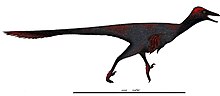 Gobivenator |
Gongpoquansaurus[161] | Gen. et comb. nov | Valid | You, Li & Dodson | Early Cretaceous (Albian) | Zhonggou Formation |
| A non-hadrosaurid hadrosauroid; a new genus for "Probactrosaurus" mazongshanensis Lü (1997). | |
Huangshanlong[162] | Gen. et sp. nov | Valid | Huang et al. | Middle Jurassic | Hongqin Formation |
| A mamenchisaurid sauropod. The type species is Huangshanlong anhuiensis. | |
Kulindadromeus[163] | Gen. et sp. nov | Valid | Godefroit et al. | Middle or Late Jurassic (Bajocian to Tithonian) | Ukureyskaya Formation |
| A non-cerapodan neornithischian. The type species is Kulindadromeus zabaikalicus. |  Kulindadromeus |
Laquintasaura[164] | Gen. et sp. nov | Valid | Barrett et al. | Early Jurassic | La Quinta Formation |
| A basal ornithischian. The type species is Laquintasaura venezuelae. | 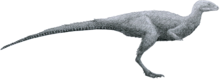 Laquintasaura |
Leinkupal[165] | Gen. et sp. nov | Valid | Gallina et al. | Early Cretaceous (late Berriasian to Valanginian) | Bajada Colorada Formation |
| A diplodocine diplodocid sauropod. The type species is Leinkupal laticauda. |  Leinkupal |
Mercuriceratops[166] | Gen. et sp. nov | Valid | Ryan et al. | Late Cretaceous (Campanian) | Dinosaur Park Formation |
| A chasmosaurine ceratopsid. The type species is Mercuriceratops gemini. |  Mercuriceratops |
Nanuqsaurus[167] | Gen. et sp. nov | Valid | Fiorillo & Tykoski | Late Cretaceous (Maastrichtian) | Prince Creek Formation |
| A tyrannosaurid theropod. The type species is Nanuqsaurus hoglundi. |  Nanuqsaurus |
Natronasaurus[148] | Gen. et comb. nov | Disputed | Ulansky | Late Jurassic (Kimmeridgian-Tithonian) | Morrison Formation |
| A stegosaurid; a new genus for "Stegosaurus" longispinus Gilmore (1914). According to Galton and Carpenter (2016) it did not meet the requirements of the International Code of Zoological Nomenclature; Galton and Carpenter made "S." longispinus the type species of a new genus Alcovasaurus.[149] | |
Panguraptor[168] | Gen. et sp. nov | Valid | You et al. | Early Jurassic | Lufeng Formation |
| A coelophysoid theropod. The type species is Panguraptor lufengensis. | |
Pentaceratops aquilonius[169] | Sp. nov | Valid | Longrich | Late Cretaceous (late Campanian) | Dinosaur Park Formation |
| A ceratopsid, a species of Pentaceratops. | |
Plesiohadros[170] | Gen. et sp. nov | Valid | Tsogtbaatar et al. | Late Cretaceous (probably late Campanian) | Djadochta Formation |
| A non-hadrosaurid hadrosauroid. The type species is Plesiohadros djadokhtaensis. | |
Qianzhousaurus[171] | Gen. et sp. nov | Valid | Lü et al. | Late Cretaceous (Maastrichtian) |
| A tyrannosaurid theropod. The type species is Qianzhousaurus sinensis. |  Qianzhousaurus | |
Quetecsaurus[172] | Gen. et sp. nov | Valid | González Riga & Ortiz David | Late Cretaceous (Turonian) | Cerro Lisandro Formation |
| A titanosaur sauropod related to Mendozasaurus and Futalognkosaurus. The type species is Quetecsaurus rusconii. |  Quetecsaurus |
Rhinorex[173] | Gen. et sp. nov | Valid[174] | Gates & Scheetz | Late Cretaceous (Campanian) | Neslen Formation |
| A saurolophine hadrosaurid. The type species is Rhinorex condrupus. | |
Rukwatitan[175] | Gen. et sp. nov | Valid | Gorscak et al. | Cretaceous (Aptian to Cenomanian) | Galula Formation |
| A titanosaur sauropod. The type species is Rukwatitan bisepultus. | |
Saldamosaurus[148] | Gen. et sp. nov | Disputed | Ulansky | Late Jurassic | Saldam Formation |
| A stegosaur. The type species is Saldamosaurus tuvensis. According to Galton and Carpenter (2016) it did not meet the requirements of the International Code of Zoological Nomenclature.[149] | |
Scelidosaurus arizonensis[148] | Sp. nov | Disputed | Ulansky | Early Jurassic (?Sinemurian-Pliensbachian) | Kayenta Formation |
| A basal thyreophoran, a species of Scelidosaurus. According to Galton and Carpenter (2016) it did not meet the requirements of the International Code of Zoological Nomenclature.[149] | |
Siamodracon[148] | Gen. et sp. nov | Disputed | Ulansky | Late Jurassic | Phu Kradung Formation |
| A stegosaur. The type species is Siamodracon altispinus. According to Galton and Carpenter (2016) it did not meet the requirements of the International Code of Zoological Nomenclature.[149] | |
Sinopeltosaurus[148] | Gen. et sp. nov | Disputed | Ulansky | Early Jurassic (Hettangian-Pliensbachian) | Lufeng Formation |
| A basal thyreophoran. The type species is Sinopeltosaurus minimus. According to Galton and Carpenter (2016) it did not meet the requirements of the International Code of Zoological Nomenclature.[149] | |
Tachiraptor[176] | Gen. et sp. nov | Valid | Langer et al. | Earliest Jurassic | La Quinta Formation |
| A stem-averostran theropod. The type species is Tachiraptor admirabilis. | |
Tambatitanis[177] | Gen. et sp. nov | Valid | Saegusa and Ikeda | Early Cretaceous (probably early Albian) | Sasayama Group |
| A titanosauriform sauropod, a member of Somphospondyli. The type species is Tambatitanis amicitiae. | |
Torvosaurus gurneyi[178] | Sp. nov | Valid | Hendrickx & Mateus | Late Jurassic (late Kimmeridgian) | Lourinhã Formation |
| A megalosauroid theropod, a species of Torvosaurus. | |
Vahiny[179] | Gen. et sp. nov | Valid | Curry Rogers & Wilson | Late Cretaceous | Maevarano Formation |
| A titanosaur sauropod. The type species is Vahiny depereti. | |
Wuerhosaurus mongoliensis[148] | Sp. nov. | Disputed | Ulansky | Early Cretaceous (Aptian-Albian) | Khukhtyk Formation |
| A stegosaur, a species of Wuerhosaurus. According to Galton and Carpenter (2016) it did not meet the requirements of the International Code of Zoological Nomenclature.[149] | |
Yongjinglong[180] | Gen. et sp. nov | Valid | Li et al. | Early Cretaceous | Hekou Group |
| A titanosaur sauropod. The type species is Yongjinglong datangi. | |
Zaraapelta[181] | Gen. et sp. nov | Valid | Arbour, Currie & Badamgarav | Late Cretaceous | Barun Goyot Formation |
| A member of Ankylosauridae. The type species is Zaraapelta nomadis. | |
Zby[182] | Gen. et sp. nov | Valid | Mateus, Mannion & Upchurch | Late Jurassic (late Kimmeridgian) | Lourinhã Formation |
| A turiasaurian sauropod. The type species is Zby atlanticus. | 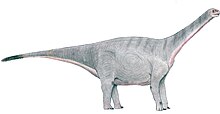 Zby |
Zhanghenglong[183] | Gen. et sp. nov | Valid | Xing et al. | Late Cretaceous (Santonian) | Majiacun Formation |
| A non-hadrosaurid hadrosauroid ornithopod. The type species is Zhanghenglong yangchengensis. |  Zhanghenglong |
Ziapelta[184] | Gen. et sp. nov | Valid | Arbour et al. | Late Cretaceous (late Campanian) | Kirtland Formation |
| An ankylosaurid. The type species is Ziapelta sanjuanensis. | 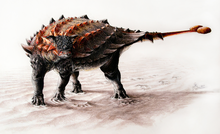 Ziapelta |


Birds
Research
- A study on the antiquity of birds is published by Lee et al. (2014).[185]
- A new specimen of Archaeopteryx is described by Foth, Tischlinger and Rauhut (2014).[186]
Zhongornis haoae, initially thought to be a bird, is argued to be a non-avian maniraptoran by O'Connor and Sullivan (2014).[187]
- A study of ecological disparity in Early Cretaceous birds is published by Mitchell and Makovicky (2014).[188]
- A subadult specimen of Zhouornis hani is described by Zhang et al. (2014).[189]
- New specimen of Hongshanornis longicresta, providing new information on the anatomy, trophic ecology and aerodynamics of this species is described from the Lower Cretaceous Yixian Formation (China) by Chiappe et al. (2014).[190]
- A study of the species status of the moa from the genus Euryapteryx is published by Huynen and Lambert (2014).[191]
- A study of growth in the moa from the genus Euryapteryx is published by Huynen et al. (2014).[192]
- A study of tbx5 gene of the moa from the genus Dinornis is published by Huynen et al. (2014).[193]
- New samples of Miocene ratite eggs are described from Namibia by Pickford (2014), who names new ootaxa Tsondabornis psammoides, Tsondabornis minor and Namornis elimensis.[194]
- Fossil remains of a relative of the hoatzin, possibly a species belonging to the genus Namibiavis, from the middle Miocene of Kenya, are described by Mayr (2014).[195]
- A specimen of Pumiliornis tessellatus with preserved stomach contents including pollen grains is described by Mayr and Wilde (2014).[196]
- A Late Pleistocene specimen of griffon vulture (Gyps fulvus) with exceptionally well preserved fossilized soft tissues is described from the Alban Hills volcanic region, Italy by Iurino et al. (2014).[197]
New taxa
| Name | Novelty | Status | Authors | Age | Unit | Location | Notes | Images |
|---|---|---|---|---|---|---|---|---|
Aegypius varswaterensis [198] | Sp nov. | Valid | Albrecht Manegold, Marco Pavia, Pippa Haarhoff | Early Pliocene | Varswater Formation |
| An Aegypius sp. related to the cinereous vulture | |
Anser djuktaiensis[199] | Sp nov. | Valid | Zelenkov & Kurochkin | Late Pleistocene |
| A species of Anser. | ||
Australornis lovei [200] | Gen. et Sp. nov. | Valid | Mayr & R. Paul Scofield | Early Paleocene | Waipara Greensand |
| An incertae sedis Neognathae, Monotypic with A. lovei. | |
Bambolinetta lignitifila [201] | Gen. et Comb. nov. | Valid | Mayr & Pavia | Miocene |
| An Anatinae genus, Comb. nov. for "Anas" lignitifila | ||
Baselrallus intermedius [202] | Gen. et Sp. nov. | Valid | De Pietri, Gerald Mayr | Early Miocene |
| A member of the Rallidae. The type species of the new genus. | ||
Caracara seymouri [203] | Sp. nov. | Valid | Suarez & Olson | Quaternary | La Carolina Talara Tar Seeps |
| A Caracara, Falconidae. | |
Cryptopsar ischyrhynchus [204] | Gen. et Sp. nov. | Valid | Hume | Holocene |
| A member of the Sturnidae, it is the type species of the new genus. | ||
Eopengornis martini [205] | Gen. et Sp. nov. | Valid | Wang, O'Connor, Zheng, | Early Cretaceous, | Huajiying Formation |
| A member of the Enantiornithes, it is the type species of the new genus. | |
Eudyptes calauina [206] | Sp. nov. | Valid | Hoffmeister, Carrillo Briceño, & Nielsen | Pliocene | Horcón Formation |
| An extinct crested penguin. | |
Evgenavis nobilis [207] | Gen. et Sp. nov. | Valid | O’Connor, Averianov, & Zelenkov | Barremian-Aptian | Ilek Formation |
| Aves incertae sedis. it is the type species of the new genus. | |
Falco hezhengensis [208] | Sp. nov. | Valid | Zhiheng, Zhonghe, Tao, | Late Miocene | Linxia Basin |
| A member of the Falconidae. | |
Fortunguavis xiaotaizicus [209] | Gen. nov. et Sp. nov. | Valid | Wang Min Jingmai K. O’Connor Zhou Zhonghe | Early Cretaceous | Jiufotang Formation |
| A member of Enantiornithes Walker, 1981. This is the type species of the new genus. | |
Gansus zheni [210] | Sp. nov. | Valid | Di Liu Luis M. Chiappe Yuguang Zhang Alyssa Bell Qingjin Meng Qiang Ji Xuri Wang | Early Cretaceous | Jiufotang Formation |
| An early member of Ornithuromorpha Chiappe, 2002, a species of Gansus. | |
Garganornis ballmanni [211] | Gen. nov. et Sp. nov. | Valid | Hanneke J. M. Meijer | Miocene | Fissure fillings |
| A member of the Anseriformes, this is the type species of the new genus. | |
Genucrassum bransatensis [212] | Gen. nov. et Sp. nov. | Valid | Vanesa L. De Pietri | Late Oligocene | MP 30; 23.03 Mya |
| A stone-curlew, Burhinidae, this is the type species of the new genus. | |
Grabauornis lingyuanensis[213] | Gen. nov. et Sp. nov. | Valid | Johan Dalsätt Per G.P. Ericson Zhou Zhonghe | Early Cretaceous | Yixian Formation |
| A member of Enantiornithes Walker, 1981. This is the type species of the new genus. | |
?Ibidopodia chavrochensis [214] | Sp. nov. | Valid | Vanesa L. De Pietri Gerald Mayr | Early Miocene | Chavroches MN 2 |
| An Idiornithid, Idiornithidae Cariamiformes, possibly a species of Ibidopodia Milne-Edwards, 1868. | |
?Ibidopodia minuta [214] | Sp. nov. | Valid | Vanesa L. De Pietri Gerald Mayr | Early Miocene | Saulcet |
| An Idiornithid, Idiornithidae Cariamiformes, possibly a species of Ibidopodia Milne-Edwards, 1868. | |
Iteravis huchzermeyeri[215] | Gen. nov. et sp. nov. | Valid | Shuang Zhou Jingmai K. O’Connor Min Wang | Early Cretaceous | Yixian Formation |
| A basal member of the Ornithuromorpha Chiappe, 2002. This is the type species of the new genus. | |
Jeholornis curvipes [216] | Sp. nov. | Valid | Ulysse Lefèvre Dongyu Hu François Escuillié Gareth Dyke Pascal Godefroit | Early Cretaceous | Yixian Formation |
| A member of Avialae Gauthier, 1986, a species of Jeholornis Zhou et Zhang, 2002. | |
Limnofregata hutchisoni [217] | Sp. nov. | Valid[218] | Thomas A. Stidham | Early Eocene | Wasatch Formation |
| A member of Fregatidae, a species of Limnofregata. | |
Longusunguis kurochkini [219] | Gen. nov. et Sp. nov. | Valid | Wang Min Zhou Zhonghe Jingmai K. O'Connor Nikita V. Zelenkov | Early Cretaceous | Jiufotang Formation |
| A member of Enantiornithes Walker, 1981 related to Bohaiornis. This is the type species of new genus. | |
Mergellus mochanovi [199] | Sp. nov. | Valid | Nikita V. Zelenkov Evgeny N. Kurochkin | Late Pleistocene |
| A member of the Anatidae related to the smew, a species of Mergellus. | ||
Mergus milleneri [220] | Sp. nov. | Valid | Murray Williams Alan J. D. Tennyson | Holocene | Chatham Island |
| A member of the Anatidae. | |
Nectornis africanus [221] | Sp. nov. | Valid | Gerald Mayr | Middle Miocene | MN 5 |
| A cormorant, Phalacrocoracidae, a species of Nectornis Cheneval, 1984. | |
Nestor chathamensis[222] | Sp. nov. | Valid | Jamie R. Wood Kieren J. Mitchell R. Paul Scofield Alan J. D. Tennyson in Wood et al. | Holocene | Chatham Islands |
| A New Zealand parrot belonging to the family Nestoridae Bonaparte, 1849, a species of Nestor. | |
?Nupharanassa mabokoensis [221] | Sp. nov. | Valid | Gerald Mayr | Middle Miocene | MN 5 |
| A jacana, Jacanidae, possibly a species of Nupharanassa Rasmussen, Olson et Simons, 1987. | |
Parabohaiornis martini [219] | Gen. nov. et Sp. nov. | Valid | Wang Min Zhou Zhonghe Jingmai K. O’Connor Nikita V. Zelenkov | Early Cretaceous | Jiufotang Formation |
| A member of Enantiornithes Walker, 1981 related to Bohaiornis. The type species of the new genus, placed in the family Bohaiornithidae Wang, Zhou, O’Connor et Zelenkov, 2014 with de genera Shenqiornis Wang, O’Connor, Zhao, Chiappe, Gao et Cheng, 2010, Sulcavis O’Connor, Zhang, Chiappe, Meng, Quanguo et Di, 2013, Zhouornis Zhang, Chiappe, Han et Chinsamy, 2013, Longusunguis Wang, Zhou, O’Connor et Zelenkov, 2014 and Bohaiornis Hu, Hou L. H. et Xu, 2011. | |
Parvavis chuxiongensis [223] | Gen. nov. et Sp. nov. | Valid | Wang Min Zhou Zhonghe Xu Guanghui | Late Cretaceous, Turonian to Santonian | Jiangdihe Formation |
| A member of Enantiornithes Walker, 1981. The type species of the new genus. | |
Pelagornis sandersi [224] | Sp. nov. | Valid | Daniel T. Ksepka | Late Oligocene | Chandler Bridge Formation, Early Chattian |
| A member of the Pelagornithidae Fürbringer, 1888, a species of Pelagornis Lartet, 1857; the bird with the biggest wingspan known up to now. | |
Piscivoravis lii [225] | Gen. nov. et Sp. nov. | Valid | Zhou Shuang Zhou Zhonghe Jingmai K. O'Connor | Early Cretaceous | Jiufotang Formation |
| A basal member of the Ornithuromorpha Chiappe, 2002. This is the type species the new genus. | |
Plotornis graculoides [201] | Comb. nov. | Valid | Gerald Mayr Marco Pavia | Miocene | MN 1-2 |
| A member of the Diomedeidae, a new name for "Chenornis" graculoides Portis 1884, creating a Comb. nov. | |
Protoazin parisiensis [226] | Gen. nov. et Sp. nov. | Valid | Gerald Mayr Vanesa L. De Pietri | Late Eocene | Priabonian, MP 20 |
| A relative of the hoatzin, Opisthocomidae. This is the type species of the new genus. | |
Sobniogallus albinojamrozi [227] | Gen. et Sp. nov. | Valid | Tomek, Bocheński, Wertz, & Świdnicka | Rupelian | Krosno Formation |
| Galliformes incertae sedis. This is the type species of the new genus. | |
Tianyuornis cheni [228] | Gen. et Sp. nov. | Valid | Xiao-Ting, O'Connor, | Early Cretaceous | Yixian Formation |
| A member of the Hongshanornithidae, the type species of the new genus. |


Pterosaurs
Research
- A study of pneumaticity of pterosaur wing bones is published by Martin and Palmer (2014).[229]
- A complete and fully articulated juvenile specimen of Scaphognathus crassirostris is described by Bennett (2014).[230]
- Partial 3D egg of Pterodaustro guinazui is described by Grellet-Tinner et al. (2014).[231]
Cearadactylus atrox is redescribed by Vila Nova et al. (2014).[232]
- The taxonomy and distribution of the family Azhdarchidae is reviewed by Averianov (2014).[233]
- A reevaluation of the fossil material attributed to Bakonydraco galaczi, indicating that the fossils actually represent at least two pterosaur taxa, is published by Prondvai, Bodor and Ősi (2014).[234]
- A study of medullary bone-like tissue in the mandibular symphyses of Bakonydraco galaczi is published by Prondvai and Stein (2014).[235]
New taxa
| Name | Novelty | Status | Authors | Age | Unit | Location | Notes | Images |
|---|---|---|---|---|---|---|---|---|
Aerodactylus[236] | Gen. et comb. nov | Valid | Vidovic & Martill | Late Jurassic | Solnhofen Limestone |
| A member of Pterodactyloidea related to Gladocephaloideus, Cycnorhamphus, Ardeadactylus and Aurorazhdarcho; a new genus for "Pterodactylus" scolopaciceps Meyer (1860). | |
Boreopterus giganticus[237] | Sp. nov | Valid | Jiang et al. | Early Cretaceous |
| A species of Boreopterus. | ||
Caiuajara[238] | Gen. et sp. nov | Valid | Manzig et al. | Late Cretaceous | Bauru Basin, Caiuá Group, Goio-Erê Formation |
| A tapejarid. The type species is Caiuajara dobruskii. | |
Hamipterus[239] | Gen. et sp. nov | Valid | Wang et al. | Early Cretaceous | Tugulu Group |
| A member of Pteranodontoidea of uncertain phylogenetic placement. The type species is Hamipterus tianshanensis. | |
Ikrandraco[240] | Gen. et sp. nov | Valid | Wang et al. | Early Cretaceous (Aptian) | Jiufotang Formation |
| A non-anhanguerian pteranodontoid. The type species is Ikrandraco avatar. | |
Kryptodrakon[241] | Gen. et sp. nov | Valid | Andres, Clark & Xu | Middle-Late Jurassic boundary |
| An early member of Pterodactyloidea. The type species is Kryptodrakon progenitor. | ||
Maaradactylus[242] | Gen. et sp. nov | Valid | Bantim et al. | Early Cretaceous (Aptian or Albian) | Romualdo Formation |
| A member of Anhangueridae. The type species is Maaradactylus kellneri. |
Other reptiles
| Name | Novelty | Status | Authors | Age | Unit | Location | Notes | Images |
|---|---|---|---|---|---|---|---|---|
Abyssomedon[243] | Gen. et sp. nov | Valid | Macdougall & Reisz | Early Permian | Garber Formation |
| A nyctiphruretid parareptile. The type species is Abyssomedon williamsi. | |
Atopodentatus[244] | Gen. et sp. nov | Valid | Cheng et al. | Middle Triassic (Anisian) | Guanling Formation |
| A marine reptile, probably a relative of sauropterygians. The type species is Atopodentatus unicus. | |
Delorhynchus cifellii[245] | Sp. nov | Valid | Reisz, Macdougall & Modesto | Early Permian | Garber Formation |
| A parareptile relative of lanthanosuchoids, a species of Delorhynchus. | |
Eohupehsuchus[246] | Gen. et sp. nov | Valid | Chen et al. | Early Triassic | Jialingjiang Formation |
| A hupehsuchian. The type species is Eohupehsuchus brevicollis. | |
Horaffia[247] | Gen. et sp. nov | Valid | Klein & Hagdorn | Middle Triassic (Ladinian) | Erfurt Formation |
| A marine diapsid reptile of uncertain phylogenetic placement. The type species is Horaffia kugleri. | |
Largocephalosaurus qianensis[248] | Sp. nov | Valid | Li et al. | Triassic | Guanling Formation |
| A member of Saurosphargidae, a species of Largocephalosaurus. | |
Parahupehsuchus[249] | Gen. et sp. nov | Valid | Chen et al. | Early Triassic | Jialingjiang Formation |
| A hupehsuchian. The type species is Parahupehsuchus longus. |
Synapsids
Non-mammalian synapsids
Research
- A study on the diel activity patterns of non-mammalian synapsids is published by Angielczyk & Schmitz (2014).[250]
- The presence of plicidentine (infolded dentine around the base of the tooth root) is reported in the maxillary and dentary teeth of Ianthodon, Sphenacodon, Secodontosaurus and Dimetrodon by Brink, LeBlanc & Reisz (2014).[251]
- A study of the anatomy of nasal cavity of Brasilitherium riograndensis is published by Ruf et al. (2014).[252]
- A study of the anatomy of the therocephalian Simorhinella baini and a taxonomic re-evaluation of the family Lycosuchidae is published by Abdala et al. (2014).[253]
New taxa
| Name | Novelty | Status | Authors | Age | Unit | Location | Notes | Images |
|---|---|---|---|---|---|---|---|---|
Abajudon[254] | Gen. et sp. nov | Valid | Angielczyk et al. | Permian | Madumabisa Mudstone[255] |
| A dicynodont of uncertain phylogenetic placement. The type species is Abajudon kaayai. | |
Alierasaurus[256] | Gen. et sp. nov | Valid | Romano & Nicosia | Permian | Cala del Vino Formation |
| A caseid. The type species is Alierasaurus ronchii. | |
Botucaraitherium[257] | Gen. et sp. nov | Valid | Soares, Martinelli & De Oliveira | Late Triassic (possibly early Norian) | Riograndia Assemblage Zone of the Candelária Sequence (Caturrita Formation) |
| A prozostrodontian cynodont. The type species is Botucaraitherium belarminoi. | |
Eocasea[258] | Gen. et sp. nov | Valid | Reisz & Fröbisch | Carboniferous (late Pennsylvanian) | Calhoun Shale |
| A member of Caseidae . The type species is Eocasea martini. | |
Sungeodon[259] | Gen. et sp. nov | Valid | Maisch & Matzke | Early Triassic | Jiucaiyuan Formation |
| A kannemeyeriiform dicynodont . The type species is Sungeodon kimkraemerae. |

Mammals
Other animals
| Name | Novelty | Status | Authors | Age | Unit | Location | Notes | Images |
|---|---|---|---|---|---|---|---|---|
Acanthocrania elusa[260] | Sp. nov | Valid | Cocks | Late Ordovician |
| A brachiopod. | ||
Akmolina? tubulus[261] | Sp. nov | Valid | Percival et al. | Cambrian (Furongian) | Sluice Box Formation |
| A brachiopod belonging to the group Acrotretida and the family Ephippelasmatidae. | |
Ascarites rufferi[262] | Sp. nov | Valid | Da Silva et al. | Middle Triassic (Ladinian) | Sítio Cortado site |
| An ascaridid nematode found in a cynodont coprolite, a species of Ascarites. | |
Ashetscolex[263] | Gen. et sp. nov | Valid | Muir et al. | Ordovician (earliest Floian) | Tonggao Formation |
| A palaeoscolecid worm. The type species is Ashetscolex nuppus. | |
Athyris africana[264] | Sp. nov | Valid | Schemm-Gregory | Devonian (late Givetian) | Western Sahara | An athyridid brachiopod, a species of Athyris. | ||
Atraktoprion podolicus[265] | Sp. nov | Valid | Szaniawski & Drygant | Early Devonian (middle Lochkovian to Pragian) |
| An atraktoprionid polychaete, a species of Atraktoprion. | ||
Beethovenia[266] | Gen. et 3 sp. et comb. nov | Valid | García-Alcalde | Devonian (Pragian and Emsian) |
| A strophodontid brachiopod. The type species is Beethovenia beethoveni; genus also includes new species B. bachi and B. brahmsi, as well as B. acutiplicata (Oehlert & Davoust, 1879) and possibly "Stropheodonta" steiningeri Drevermann (1907). | ||
Bicoelia corticifera[267] | Sp. nov | Valid | Senowbari-Daryan & Link | Late Triassic (Norian) | Kasımlar Formation |
| A demosponge belonging to the order Agelasida and the family Preperonidellidae. | |
Boreadorthis sheehani[260] | Sp. nov | Valid | Cocks | Late Ordovician |
| A brachiopod. | ||
Brevaspidella[268] | Gen. et sp. nov | Valid | Rhebergen | Late Ordovician |
| A demosponge belonging to the family Anthaspidellidae. The type species is B. dispersa. | ||
Cambroskiadeion[269] | Gen. et sp. nov | Valid | Moore, Porter & Li | Early Cambrian | Dengying Formation |
| An animal of uncertain phylogenetic placement with a cap-shaped shell. The type species is Cambroskiadeion xiaowanense. | |
Christiania nilssoni sholeshookensis[260] | Subsp. nov | Valid | Cocks | Late Ordovician |
| A brachiopod. | ||
Cirpa alkayae[270] | Sp. nov | Valid | Vörös | Early Jurassic (Pliensbachian) |
| A wellerellid rhynchonellid brachiopod, a species of Cirpa. | ||
Conchicolites crispisulcans[271] | Sp. nov | Valid | Vinn, Jarochowska & Munnecke | Silurian (Wenlock) | Halla Formation |
| A member of Cornulitida (a group of animals of uncertain phylogenetic placement, possibly molluscs), a species of Conchicolites. | |
Cryptothyris magnifica[260] | Sp. nov | Valid | Cocks | Late Ordovician |
| A brachiopod. | ||
Dedzetina major[260] | Sp. nov | Valid | Cocks | Late Ordovician |
| A brachiopod. | ||
Eklexibella[272] | Gen. et 2 sp. nov | Valid | Keupp, Gründel & Wiese | Early Jurassic (late Pliensbachian) |
| A terebellid polychaete. Genus contains two species: Eklexibella buttenheimensis and Eklexibella johanni. | ||
Enalikter[273] | Gen. et sp. nov | Valid | Siveter et al. | Silurian | Herefordshire Lagerstätte |
| An animal of uncertain phylogenetic placement; it might be a megacheiran arthropod[273][274] or an annelid.[275] The type species is Enalikter aphson. | |
Eopriapulites[276] | Gen. et sp. nov | Valid | Liu & Xiao in Liu et al. | Cambrian (Fortunian) | Kuanchuanpu Formation |
| A priapulid-like scalidophoran. The type species is Eopriapulites sphinx. | |
Eostropheodonta portfieldensis[260] | Sp. nov | Valid | Cocks | Late Ordovician |
| A brachiopod. | ||
Ernstipora[277] | Gen. et sp. nov | Valid | Suárez-Andrés & Wyse Jackson | Devonian (Emsian) |
| A bryozoan belonging to the group Fenestrata. Genus includes new species E. mackinneyi. | ||
Eximipriapulus[278] | Gen. et sp. nov | Valid | Ma et al. | Cambrian | Chengjiang Lagerstätte |
| A member of Priapulida. The type species is Eximipriapulus globocaudatus. | |
Fardenia gwaliae[260] | Sp. nov | Valid | Cocks | Late Ordovician |
| A brachiopod. | ||
Filihernodia[279] | Gen. et sp. nov | Valid | Taylor & Wilson in Frey et al. | Early Devonian (Pragian) |
| A reptariid hederellid. The type species is Filihernodia buccina. | ||
Foliomena xinjiangensis[280] | Sp. nov | Valid | Zhan et al. | Ordovician (late Katian) | Yinpingshan Formation |
| A brachiopod. | |
Glyptorthis splendens[260] | Sp. nov | Valid | Cocks | Late Ordovician |
| A brachiopod. | ||
Gunnarella mcdermotti[260] | Sp. nov | Valid | Cocks | Late Ordovician |
| A brachiopod. | ||
Haplistion toftanum[281] | Sp. nov | Valid | Rhebergen & Botting | Silurian (Telychian) |
| A haplistiid spirosclerophorid demosponge, a species of Haplistion. | ||
Harknessella stevensorum[260] | Sp. nov | Valid | Cocks | Late Ordovician |
| A brachiopod. | ||
Hyalonema vetteri[282] | Sp. nov | Valid | Janussen | Late Cretaceous (Coniacian) | Arnager Formation |
| A hexactinellid sponge, a species of Hyalonema. | |
Kassinella tarimensis[280] | Sp. nov | Valid | Zhan et al. | Ordovician (late Katian) | Yinpingshan Formation |
| A brachiopod. | |
Kullervo grandis[260] | Sp. nov | Valid | Cocks | Late Ordovician |
| A brachiopod. | ||
Leoniorthis rubeli[283] | Sp. nov | Valid | Hints | Ordovician |
| A brachiopod belonging to the group Orthida and the family Orthidae. | ||
Lindstroemispongia[281] | Gen. et sp. nov | Valid | Rhebergen & Botting | Silurian (Telychian) |
| An astylospongiid streptosclerophorid demosponge. The type species is Lindstroemispongia cylindrata. | ||
Lyrarapax[284] | Gen. et sp. nov | Valid | Cong et al. | Early Cambrian |
| A member of Anomalocarididae (a group of animals with uncertain phylogenetic placement, possibly stem-arthropods). The type species is Lyrarapax unguispinus. | ||
Mackerrovia? jinei[260] | Sp. nov | Valid | Cocks | Late Ordovician |
| A brachiopod. | ||
Maruia[261] | Gen. et sp. nov | Valid | Percival et al. | Cambrian (Furongian) | Sluice Box Formation |
| A brachiopod, possibly a member of Acrotretida. The type species is M. castellum. | |
Mirilingula antipodes[261] | Sp. nov | Valid | Percival et al. | Cambrian (Furongian) | Sluice Box Formation |
| A brachiopod belonging to the group Linguloidea and the family Lingulellotretidae. | |
Multistella leipnitzae[281] | Sp. nov | Valid | Rhebergen & Botting | Silurian (Telychian) |
| An anthaspidellid orchocladine demosponge, a species of Multistella. | ||
Neoplatystrophia deani[260] | Sp. nov | Valid | Cocks | Late Ordovician |
| A brachiopod. | ||
Nesonektris[285] | Gen. et sp. nov | Valid | García-Bellido et al. | Cambrian | Emu Bay Shale |
| A member of Vetulicolida. The type species is Nesonektris aldridgei. | |
Nicolella crabbi[260] | Sp. nov | Valid | Cocks | Late Ordovician |
| A brachiopod. | ||
Nidelric[286] | Gen. et sp. nov | Valid | Hou et al. | Early Cambrian | Heilinpu Formation |
| An animal of uncertain phylogenetic placement; a member of Chancelloriida or a chancelloriid-like animal. The type species is Nidelric pugio. | |
Nisusia granosa[287] | Sp. nov | Valid | Mao, Wang & Zhao | Cambrian | Kaili Formation |
| A brachiopod, a species of Nisusia. | |
Norvegiograptus[288] | Gen. et comb. nov | Valid | Li et al. | Early Ordovician |
| A graptolite belonging to the family Dichograptidae. A new genus for "Didymograptus" liber Monsen (1937); genus also includes "Didymograptus" enshiensis Ni in Mu et al. (1979). | ||
Oikozetetes mounti[289] | Sp. nov | Valid | Jacquet, Brock & Paterson | Early Cambrian | Mernmerna Formation |
| A member of Halkieriidae (a group of animals of uncertain phylogenetic placement, possibly molluscs), a species of Oikozetetes. | |
Opetionella incompta[281] | Sp. nov | Valid | Rhebergen & Botting | Silurian (Telychian) |
| A demosponge, possibly a member of the group Hadromerida; a species of Opetionella. | ||
Orbiculoidea liaoi[290] | Sp. nov | Valid | Zhang et al. | Permian (Lopingian) |
| A brachiopod belonging to the family Discinidae. | ||
Paleoxyuris[291] | Gen. et sp. nov | Valid | Hugot et al. | Triassic | Sítio Cortado site |
| A heteroxynematid oxyurid nematode known from an egg found in a cynodont coprolite. The type species is Paleoxyuris cockburni. | |
Phragmodictya jinshaensis[292] | Sp. nov | Valid | Xinglian et al. | Cambrian |
| A hexactinellid sponge, a species of Phragmodictya. | ||
Pirabasoporella[293] | Gen. et 3 sp. nov | Valid | Zágoršek et al. | Miocene | Baitoa Formation |
| An ascophoran belonging to the family Jaculinidae. The type species is P. atalaiaensis; genus also includes P. baitoae and P. chipolae. | |
Plicostropheodonta crassicosta[266] | Sp. nov | Valid | García-Alcalde | Devonian (Emsian) |
| A strophodontid brachiopod, a species of Plicostropheodonta. | ||
Plicostropheodonta latronensis[266] | Sp. nov | Valid | García-Alcalde | Devonian (Emsian) |
| A strophodontid brachiopod, a species of Plicostropheodonta. | ||
Polychaetaspis kozlowskii[265] | Sp. nov | Valid | Szaniawski & Drygant | Early Devonian (early Lochkovian) |
| A polychaetaspid polychaete, a species of Polychaetaspis. | ||
Postperissocoelia[281] | Gen. et comb. et sp. nov | Valid | Rhebergen & Botting | Silurian |
| A streptosolenid orchocladine demosponge. A new genus for "Perissocoelia" spinosa Rigby & Chatterton (1989); genus also contains new species Postperissocoelia gnisvardensis. | ||
Pseudoperipatus[294] | Gen. et sp. nov | Valid | Haug & Haug | Cambrian | Burgess Shale |
| A cycloneuralian worm. The type species is Pseudoperipatus hintelmannae. | |
Rogorthis[283] | Gen. et comb. nov | Valid | Hints | Ordovician (Darriwilian) | Kandle Formation |
| A brachiopod belonging to the group Orthida and the family Orthidae. The type species is "Cyrtonotella" pakriensis Rubel (1961). | |
Salopia posterior[260] | Sp. nov | Valid | Cocks | Late Ordovician |
| A brachiopod. | ||
Sampo transversa[260] | Sp. nov | Valid | Cocks | Late Ordovician |
| A brachiopod. | ||
Sanduscolex[263] | Gen. et sp. nov | Valid | Muir et al. | Ordovician (earliest Floian) | Tonggao Formation |
| A palaeoscolecid worm. The type species is Sanduscolex regularis. | |
Sericoidea minuta[280] | Sp. nov | Valid | Zhan et al. | Ordovician (late Katian) | Yinpingshan Formation |
| A brachiopod. | |
Spiriferellina fredericksi[295] | Sp. nov | Valid | Tazawa | Permian (Wordian) |
| A spiriferellinid spiriferinid brachiopod. | ||
Tolen[296] | Gen. et sp. nov | Valid | Holmer, Popov & Bassett | Ordovician (Katian) | Akdombak Formation |
| A brachiopod belonging to the class Chileata and the order Chileida. The type species is T. multicostatus. | |
Trifissura[296] | Gen. et comb et sp. nov | Valid | Holmer, Popov & Bassett | Silurian | Coalbrookdale Formation |
| A brachiopod belonging to the class Chileata and the order Chileida. The type species is "Obolus" davidsoni var. transversus Salter in Davidson (1866) (raised to the rank of the separate species Trifissura transversa); genus also includes new species T. rigida. | |
Triplesia hintsae[260] | Sp. nov | Valid | Cocks | Late Ordovician |
| A brachiopod. | ||
Urphaenomenospongia[281] | Gen. et sp. nov | Valid | Rhebergen & Botting | Silurian (Telychian) |
| A glass sponge, possibly a member of Lyssacinosida. The type species is Urphaenomenospongia euplectelloides. | ||
Waflascolex[297] | Gen. et sp. nov | Valid | Wang et al. | Ordovician (Tremadocian) |
| A palaeoscolecid worm. The type species is Waflascolex changdensis. | ||
Wiwaxia foliosa[298] | Sp. nov | Valid | Yang et al. | Cambrian | Hongjingshao Formation |
| An animal of uncertain phylogenetic placement, a species of Wiwaxia. | |
Yuganotheca[299] | Gen. et sp. nov | Valid | Zhang, Li & Holmer in Zhang et al. | Cambrian | Heilinpu Formation |
| A member of Lophophorata of uncertain phylogenetic placement. The type species is Yuganotheca elegans. |


Other organisms
| Name | Novelty | Status | Authors | Age | Unit | Location | Notes | Images |
|---|---|---|---|---|---|---|---|---|
Cyathus dominicanus[300] | Sp. nov | Valid | Poinar | Eocene or Miocene | Dominican amber |
| A fungus, a species of Cyathus. | |
Elainabella[301] | Gen. et sp. nov | Valid | Rowland & Rodriguez | Ediacaran | Deep Spring Formation |
| A multicellular alga of uncertain phylogenetic placement. Genus includes new species E. deepspringensis. | |
Eopalaeoaplysina[302] | Gen. et sp. nov | Valid | Anderson & Beauchamp | Carboniferous (Moscovian to Kasimovian) | Belcourt Formation |
| A red alga, a relative of Palaeoaplysina. Genus includes new species E. daviesi. | |
Helmutella[303] | Gen. et sp. nov | Valid | Krings & Taylor | Early Devonian | Rhynie chert |
| A fungus described on the basis of a reproductive unit. Genus includes new species H. devonica. | |
Nidula baltica[300] | Sp. nov | Valid | Poinar | Eocene | Baltic amber |
| A fungus, a species of Nidula. | |
Nilpenia[304] | Gen. et sp. nov | Valid | Droser et al. | Precambrian | Ediacara Fossil Site at Nilpena, Flinders Ranges |
| "An organism of unknown affinities with a growth pattern convergent on that of extant fungi, lichens and encrusting algae".[304] The type species is Nilpenia rossi. | |
Palaeogaster[305] | Gen. et sp. nov | Valid | Poinar, Alfredo & Baseia | Early Cretaceous (late Albian) |
| A fungus belonging to the group Sclerodermatineae. The type species is Palaeogaster micromorpha. | ||
Plexus[306] | Gen. et sp. nov | Valid | Joel, Droser & Gehling | Precambrian |
| A tubular, serially divided organism with a bilateral morphology of uncertain phylogenetic placement. The type species is Plexus ricei. | ||
Wutubus[307] | Gen. et sp. nov | Valid | Chen et al. | Precambrian | Dengying Formation |
| An annulated tubular organism of uncertain phylogenetic placement. The type species is Wutubus annularis. | |
Xylaria antiqua[308] | Sp. nov | Valid | Poinar | Eocene or Miocene |
| A fungus belonging to the family Xylariaceae found in Dominican amber, a species of Xylaria. |

References
^ Gini-Newman, Garfield; Graham, Elizabeth (2001). Echoes from the past: world history to the 16th century. Toronto: McGraw-Hill Ryerson Ltd. ISBN 9780070887398. OCLC 46769716..mw-parser-output cite.citation{font-style:inherit}.mw-parser-output .citation q{quotes:"""""""'""'"}.mw-parser-output .citation .cs1-lock-free a{background:url("//upload.wikimedia.org/wikipedia/commons/thumb/6/65/Lock-green.svg/9px-Lock-green.svg.png")no-repeat;background-position:right .1em center}.mw-parser-output .citation .cs1-lock-limited a,.mw-parser-output .citation .cs1-lock-registration a{background:url("//upload.wikimedia.org/wikipedia/commons/thumb/d/d6/Lock-gray-alt-2.svg/9px-Lock-gray-alt-2.svg.png")no-repeat;background-position:right .1em center}.mw-parser-output .citation .cs1-lock-subscription a{background:url("//upload.wikimedia.org/wikipedia/commons/thumb/a/aa/Lock-red-alt-2.svg/9px-Lock-red-alt-2.svg.png")no-repeat;background-position:right .1em center}.mw-parser-output .cs1-subscription,.mw-parser-output .cs1-registration{color:#555}.mw-parser-output .cs1-subscription span,.mw-parser-output .cs1-registration span{border-bottom:1px dotted;cursor:help}.mw-parser-output .cs1-ws-icon a{background:url("//upload.wikimedia.org/wikipedia/commons/thumb/4/4c/Wikisource-logo.svg/12px-Wikisource-logo.svg.png")no-repeat;background-position:right .1em center}.mw-parser-output code.cs1-code{color:inherit;background:inherit;border:inherit;padding:inherit}.mw-parser-output .cs1-hidden-error{display:none;font-size:100%}.mw-parser-output .cs1-visible-error{font-size:100%}.mw-parser-output .cs1-maint{display:none;color:#33aa33;margin-left:0.3em}.mw-parser-output .cs1-subscription,.mw-parser-output .cs1-registration,.mw-parser-output .cs1-format{font-size:95%}.mw-parser-output .cs1-kern-left,.mw-parser-output .cs1-kern-wl-left{padding-left:0.2em}.mw-parser-output .cs1-kern-right,.mw-parser-output .cs1-kern-wl-right{padding-right:0.2em}
^ Martha, Silviu O.; Taylor, Paul D.; Matsuyama, Kei; Scholz, Joachim (2014). "A brief history of misidentification and missing links: the Jurassic cyclostome Kololophos Gregory, 1896 and a new genus from the Cretaceous". Studi Trentini di Scienze Naturali. 94: 169–179.
^ abcdefghijklmnopq Ratan Lal Jain (2014). "Neogene fossils from Kathiawar, Gujarat, India with special emphasis on taxonomic description of molluscs and corals". Palaeontologia Indica (New Series). 55: 1–470. ISSN 0970-0528.
^ abcd Carden C. Wallace; Francesca R. Bosellini (2014). "Acropora (Scleractinia) from the Oligocene and Miocene of Europe: species longevity, origination and turnover following the Eocene–Oligocene transition". Journal of Systematic Palaeontology. 13 (6): 447–469. doi:10.1080/14772019.2014.930525.
^ abcd http://zoobank.org/References/CF79D0FC-86C8-4898-B4C0-82C570045F52
^ abc J. Fedorowski; C. H. Stevens (2014). "Late Carboniferous colonial Rugosa (Anthozoa) from Alaska". Geologica Acta. 12 (3): 239–267. doi:10.1344/GeologicaActa2014.12.3.6.
^ abcdef Sergio Rodríguez; Ian D. Somerville (2014). "The Axophyllinae from SW Spain: a review". Boletín de la Real Sociedad Española de Historia Natural, Sección Geológica. 108: 81–137. ISSN 0583-7510.
^ Gerd Geyer; John S. Peel; Michael Streng; Sebastian Voigt; Jan Fischer; Marvin Preuße (2014). "A remarkable Amgan (Middle Cambrian, Stage 5) fauna from the Sauk Tanga, Madygen region, Kyrgyzstan". Bulletin of Geosciences. 89 (2): 375–400. doi:10.3140/bull.geosci.1434.
^ Alexander G. Liu; Jack J. Matthews; Latha R. Menon; Duncan McIlroy; Martin D. Brasier (2014). "Haootia quadriformis n. gen., n. sp., interpreted as a muscular cnidarian impression from the Late Ediacaran period (approx. 560 Ma)". Proceedings of the Royal Society B: Biological Sciences. 281 (1793): 20141202. doi:10.1098/rspb.2014.1202. PMC 4173675. PMID 25165764.
^ Shuji Niko; Tomio Adachi (2014). "Halysites miyazakiensis, a New Species of Silurian Halysitids (Coelenterata: Tabulata) from the Gionyama Formation, Miyazaki Prefecture, Japan" (PDF). Bulletin of the National Museum of Nature and Science, Series C. 40: 11–13.
^ Shuji Niko; Takehiko Haikawa; Masayuki Fujikawa (2014). "Early Carboniferous tabulate corals from the Nagatophyllum satoi zone (middle Visean) of the Akiyoshi Limestone Group, Yamaguchi Prefecture". Bulletin of the Akiyoshi-dai Museum of Natural History. 49: 1–6.
^ Andrzej Baliński; Yuanlin Sun; Jerzy Dzik (2014). "Probable advanced hydroid from the Early Ordovician of China". Paläontologische Zeitschrift. 88 (1): 1–10. doi:10.1007/s12542-013-0169-1.
^ Shuji Niko; Yousuke Ibaraki; Jun-ichi Tazawa (2014). "Devonian tabulate corals from pebbles in Mesozoic conglomerate, Kotaki, Niigata Prefecture, central Japan. Part 1: Favositina". Science reports of Niigata University. (Geology). 29: 53–66.
^ Dieter Weyer (2014). "Thurispina nov. gen. (Anthozoa, Rugosa) from the Upper Famennian of Thuringia (Germany)". Paläontologie, Stratigraphie, Fazies. (22), Freiberger Forschungshefte, C 548: 109–151.
^ abcdefghijklmnopqrstuvwxyzaaabacadaeafagahaiajakalamanaoapaqarasatauavawaxayazbabbbcbdbebfbgbhbibjbkblbmbnbobp Michael J. Orchard (2014). "Conodonts from the Carnian-Norian Boundary (Upper Triassic) of Black Bear Ridge, Northeastern British Columbia, Canada". New Mexico Museum of Natural History and Science Bulletin. 64: 1–139.
^ Xiyao Cai; Xiaohong Yuan; Yasheng Wu (2014). "Conodonts from the Upper Ordovician in Well Z2 of the central Tarim Basin and the age of conodont-bearing reefal beds". Acta Micropalaeontologica Sinica. 31 (3): 285–293.
^ ab Gabriella Bagnoli; Svend Stouge (2014). "Upper Furongian (Cambrian) conodonts from the Degerhamn quarry road section, southern Öland, Sweden". GFF. 136 (3): 436–458. doi:10.1080/11035897.2013.858768.
^ Alexander B. Doweld (2014). "Gobduntaulepis, a new generic name for Acantholepis Pianovskij, 1989 (Conodonta) non Krøyer, 1846 (Actinopterygii)". Zootaxa. 3793 (4): 499–500. doi:10.11646/zootaxa.3793.4.8.
^ ab Guichun Wu; Zhansheng Ji; Julie A. Trotter; Jianxin Yao; Liqin Zhou (2014). "Conodont biostratigraphy of a new Permo-Triassic boundary section at Wenbudangsang, north Tibet". Palaeogeography, Palaeoclimatology, Palaeoecology. 411: 188–207. doi:10.1016/j.palaeo.2014.06.016.
^ Stig M. Bergström; Annalisa Ferretti (2015). "Conodonts in the Upper Ordovician Keisley Limestone of northern England: taxonomy, biostratigraphical significance and biogeographical relationships". Papers in Palaeontology. 1 (1): 1–32. doi:10.1002/spp2.1003.
^ http://zoobank.org/References/BF8B02F1-D98D-4335-86FC-5A02F145F71A
^ Bo Yang; Dong-Xun Yuan; Charles M. Henderson; Shu-Zhong Shen (2014). "Parafurnishius, an Induan (Lower Triassic) conodont new genus from northeastern Sichuan Province, Southwest China and its evolutionary implications". Palaeoworld. 23 (3–4): 263–275. doi:10.1016/j.palwor.2014.10.003.
^ abcdefghi Valeryi V. Baranov; Ladislav Slavík; Robert B. Blodgett (2014). "Early Devonian polygnathids of Northeast Asia and correlation of Pragian/Emsian strata of the marginal seas of Angarida". Bulletin of Geosciences. 89 (3): 645–678. doi:10.3140/bull.geosci.1483.
^ abc C. Martínez-Pérez; J. I. Valenzuela-Ríos (2014). "New Lower Devonian Polygnathids (Conodonta) from the Spanish Central Pyrenees, with comments on the early radiation of the group" (PDF). Journal of Iberian Geology. 40 (1): 141–155. doi:10.5209/rev_JIGE.2014.v40.n1.44095.
[permanent dead link]
^ ab Wenkun Qie; Xionghua Zhang; Yuansheng Du; Bing Yang; Wenting Ji; Genming Luo (2014). "Conodont biostratigraphy of Tournaisian shallow-water carbonates in central Guangxi, South China". Geobios. 47 (6): 389–401. doi:10.1016/j.geobios.2014.09.005.
^ Zhihong Li; Zhongqin Peng; Long Cheng; Chuanshang Wang; Baozhong Wang (2014). "New material of the Early Carboniferous conodonts from the lower member of the Baping Formation in Nandong, Guangxi, China". Acta Micropalaeontologica Sinica. 31 (3): 271–284.
^ G. Clément; O. Lebedev (2014). "Revision of the early tetrapod Obruchevichthys Vorobyeva, 1977 from the Frasnian (Upper Devonian) of the North-western East European Platform". Paleontological Journal. 48 (10): 1082–1091. doi:10.1134/S0031030114100037.
^ Nadia B. Fröbisch; Constanze Bickelmann; Florian Witzmann (2014). "Early evolution of limb regeneration in tetrapods: evidence from a 300-million-year-old amphibian". Proceedings of the Royal Society B: Biological Sciences. 281 (1794): 20141550. doi:10.1098/rspb.2014.1550. PMC 4211449. PMID 25253458.
^ Simone Maganuco; Giovanni Pasini; Marco Auditore (2014). "A revision of the short-faced stereospondyls Mahavisaurus dentatus and Lyrosaurus australis from the Lower Triassic of Madagascar: cranial anatomy, ontogenetic remarks, palaeoecology and rhytidosteid phylogeny". Memorie della Società Italiana di Scienze Naturali e del Museo Civico di Storia Naturale di Milano. XXXIX: 3–64.
^ Christian A. Sidor; J. Sébastien Steyer; William R. Hammer (2014). "A new capitosauroid temnospondyl from the Middle Triassic upper Fremouw Formation of Antarctica". Journal of Vertebrate Paleontology. 34 (3): 539–548. doi:10.1080/02724634.2013.808205.
^ Rainer R. Schoch (2014). "First evidence of the branchiosaurid temnospondyl Leptorophus in the Early Permian of the Saar-Nahe Basin (SW Germany)". Neues Jahrbuch für Geologie und Paläontologie - Abhandlungen. 272 (2): 225–236. doi:10.1127/0077-7749/2014/0401.
^ Rainer R. Schoch; Andrew R. Milner; Florian Witzmann (2014). "Skull morphology and phylogenetic relationships of a new Middle Triassic plagiosaurid temnospondyl from Germany, and the evolution of plagiosaurid eyes". Palaeontology. 57 (5): 1045–1058. doi:10.1111/pala.12101.
^ http://zoobank.org/References/D0318B76-8359-4DD2-BA0F-38ED7A7B09D5
^ Rainer R. Schoch; Andrew R. Milner (2014). Handbook of Paleoherpetology. Part 3A2. Temnospondyli I. Verlag Dr. Friedrich Pfeil. p. 60. ISBN 978-3-89937-170-3.
^ ab M. A. Shishkin; I. V. Novikov; J. Fortuny (2014). "New bystrowianid chroniosuchians (Amphibia, Anthracosauromorpha) from the Triassic of Russia and diversification of Bystrowianidae". Paleontological Journal. 48 (5): 512–522. doi:10.1134/S0031030114050098.
^ ab Jun Liu; Li Xu; Song-Hai Jia; Han-Yong Pu; Xiao-Ling Liu (2014). "The Jiyuan tetrapod fauna of the Upper Permian of China—2. stratigraphy, taxonomical review, and correlation" (PDF). Vertebrata PalAsiatica. 52 (3): 328–339. doi:10.19615/j.cnki.1000-3118.2014.03.005.
^ Rodrigo A. Otero; Paulina Jimenez-Huidobro; Sergio Soto-Acuña; Roberto E. Yury-Yáñez (2014). "Evidence of a giant helmeted frog (Australobatrachia, Calyptocephalellidae) from Eocene levels of the Magallanes Basin, southernmost Chile". Journal of South American Earth Sciences. 55: 133–140. doi:10.1016/j.jsames.2014.06.010.
^ Zbyněk Roček; Michael Wuttke; James D. Gardner; Bhart-Anjan Singh Bhullar (2014). "The Euro-American genus Eopelobates, and a re-definition of the family Pelobatidae (Amphibia, Anura)". Palaeobiodiversity and Palaeoenvironments. 94 (4): 529–567. doi:10.1007/s12549-014-0169-5.
^ Valentin Fischer; Maxim S. Arkhangelsky; Darren Naish; Ilya M. Stenshin; Gleb N. Uspensky & Pascal Godefroit (2014). "Simbirskiasaurus and Pervushovisaurus reassessed: implications for the taxonomy and cranial osteology of Cretaceous platypterygiine ichthyosaurs". Zoological Journal of the Linnean Society. 171 (4): 822–841. doi:10.1111/zoj.12158.
^ Aubrey Jane Roberts; Patrick Scott Druckenmiller; Glenn-Peter Sætre & Jørn Harald Hurum (2014). "A New Upper Jurassic Ophthalmosaurid Ichthyosaur from the Slottsmøya Member, Agardhfjellet Formation of Central Spitsbergen". PLOS ONE. 9 (8): e103152. doi:10.1371/journal.pone.0103152. PMC 4118863. PMID 25084533.
^ Valentin Fischer; Maxim S. Arkhangelsky; Gleb N. Uspensky; Ilya M. Stenshin & Pascal Godefroit (2014). "A new Lower Cretaceous ichthyosaur from Russia reveals skull shape conservatism within Ophthalmosaurinae". Geological Magazine. 151 (1): 60–70. doi:10.1017/S0016756812000994.
^ Valentin Fischer; Nathalie Bardet; Myette Guiomar & Pascal Godefroit (2014). "High Diversity in Cretaceous Ichthyosaurs from Europe Prior to Their Extinction". PLOS ONE. 9 (1): e84709. doi:10.1371/journal.pone.0084709. PMC 3897400. PMID 24465427.
^ M.S. Arkhangelsky & N.G. Zverkov (2014). "On a new ichthyosaur of the genus Undorosaurus" (PDF). Proceedings of the Zoological Institute of the Russian Academy of Sciences. 318 (3): 187–196.
^ Rodrigo A. Otero; Sergio Soto-Acuña; Frank Robin O'Keefe; José P. O’Gorman; Wolfgang Stinnesbeck; Mario E. Suárez; David Rubilar-Rogers; Christian Salazar; Luis Arturo Quinzio-Sinn (2014). "Aristonectes quiriquinensis, sp. nov., a new highly derived elasmosaurid from the upper Maastrichtian of central Chile". Journal of Vertebrate Paleontology. 34 (1): 100–125. doi:10.1080/02724634.2013.780953.
^ Michael W. Maisch (2014). "A well preserved skull of Cymatosaurus (Reptilia: Sauropterygia) from the uppermost Buntsandstein (Middle Triassic) of Germany". Neues Jahrbuch für Geologie und Paläontologie - Abhandlungen. 272 (2): 213–224. doi:10.1127/0077-7749/2014/0407.
^ Da-Yong Jiang; Ryosuke Motani; Andrea Tintori; Olivier Rieppel; Guan-Bao Chen; Jian-Dong Huang; Rong Zhang; Zuo-Yu Sun; Cheng Ji (2014). "The Early Triassic eosauropterygian Majiashanosaurus discocoracoidis, gen. et sp. nov. (Reptilia, Sauropterygia), from Chaohu, Anhui Province, People's Republic of China". Journal of Vertebrate Paleontology. 34 (5): 1044–1052. doi:10.1080/02724634.2014.846264.
^ Jun Liu; Shi-xue Hu; Olivier Rieppel; Da-yong Jiang; Michael J. Benton; Neil P. Kelley; Jonathan C. Aitchison; Chang-yong Zhou; Wen Wen; Jin-yuan Huang; Tao Xie; Tao Lv (2014). "A gigantic nothosaur (Reptilia: Sauropterygia) from the Middle Triassic of SW China and its implication for the Triassic biotic recovery". Scientific Reports. 4: Article number 7142. doi:10.1038/srep07142. PMC 4245812. PMID 25429609.
^ Silvio Renesto; Giorgio Binelli; Hans Hagdorn (2014). "A new pachypleurosaur from the Middle Triassic Besano Formation of Northern Italy". Neues Jahrbuch für Geologie und Paläontologie - Abhandlungen. 271 (2): 151–168. doi:10.1127/0077-7749/2014/0382.
^ Nicole Klein & Torsten M. Scheyer (2014). "A new placodont sauropterygian from the Middle Triassic of the Netherlands". Acta Palaeontologica Polonica. 59 (4): 887–902. doi:10.4202/app.2012.0147.
^ Zulma Gasparini; José P. O'Gorman (2014). "A new species of Pliosaurus (Sauropterygia, Plesiosauria) from the Upper Jurassic of northwestern Patagonia, Argentina". Ameghiniana. 51 (4): 269–283. doi:10.5710/amgh.03.04.2014.2225.
^ Sebastian Apesteguia; Raúl O. Gómez; Guillermo W. Rougier (2014). "The youngest South American rhynchocephalian, a survivor of the K/Pg extinction". Proceedings of the Royal Society B: Biological Sciences. 281 (1792): 20140811. doi:10.1098/rspb.2014.0811. PMC 4150314. PMID 25143041.
^ Sebastian Apesteguia; Jose L. Carballido (2014). "A new eilenodontine (Lepidosauria, Sphenodontidae) from the Lower Cretaceous of central Patagonia". Journal of Vertebrate Paleontology. 34 (2): 303–317. doi:10.1080/02724634.2013.803974.
^ Arnau Bolet; Massimo Delfino; Josep Fortuny; Sergio Almécija; Josep M. Robles; David M. Alba (2014). "An Amphisbaenian Skull from the European Miocene and the Evolution of Mediterranean Worm Lizards". PLOS ONE. 9 (6): e98082. doi:10.1371/journal.pone.0098082. PMC 4045672. PMID 24896828.
^ Andrej Čerňanský; Jean-Claude Rage; Jozef Klembara (2014). "The Early Miocene squamates of Amöneburg (Germany): the first stages of modern squamates in Europe". Journal of Systematic Palaeontology. 13 (2): 97–128. doi:10.1080/14772019.2014.897266.
^ http://zoobank.org/References/426A24DC-719B-4D13-86BF-E2858F1F1D49
^ Tiago R. Simões; Michael W. Caldwell; Alexander W. A. Kellner (2014). "A new Early Cretaceous lizard species from Brazil, and the phylogenetic position of the oldest known South American squamates". Journal of Systematic Palaeontology. 13 (7): 601–614. doi:10.1080/14772019.2014.947342.
^ http://zoobank.org/References/CE86D7DB-DD4F-4DDE-A665-612442397CE1
^ Randall L. Nydam (2014). "Dakotaseps gen. nov., a replacement name for the lizard genus Dakotasaurus Nydam 2013, a junior homonym of the ichnotaxon Dakotasaurus Branson and Mehl 1932". Zootaxa. 3900 (1): 150. doi:10.11646/zootaxa.3900.1.11.
^ Randall L. Nydam (2013). "Lizards and Snakes from the Cenomanian through Campanian of Southern Utah: Filling the Gap in the Fossil Record of Squamata from the Late Cretaceous of the Western Interior of North America". In Alan L. Titus; Mark A. Loewen. At the Top of the Grand Staircase: The Late Cretaceous of Southern Utah. Indiana University Press. pp. 370–423. ISBN 978-0-253-00896-1.
^ Li Xu; Xiaochun Wu; Junchang Lü; Songhai Jia; Jiming Zhang; Hanyong Pu; Xingliao Zhang (2014). "A New Lizard (Lepidosauria: Squamata) from the Upper Cretaceous of Henan, China". Acta Geologica Sinica - English Edition. 88 (4): 1041–1050. doi:10.1111/1755-6724.12271.
^ Salvador Bailon; Renaud Boistel; Pere Bover; Josep Antoni Alcover (2014). "Maioricalacerta rafelinensis, gen. et sp. nov. (Squamata, Lacertidae), from the early Pliocene of Mallorca (Balearic Islands, western Mediterranean Sea)". Journal of Vertebrate Paleontology. 34 (2): 318–326. doi:10.1080/02724634.2013.799481.
^ Arnau Bolet; Marc Augé (2014). "A New Miniaturized Lizard From the Late Eocene of France and Spain". The Anatomical Record. 297 (3): 505–515. doi:10.1002/ar.22855. PMID 24482323.
^ ab Adam C. Pritchard; Jacob A. McCartney; David W. Krause; Nathan J. Kley (2014). "New snakes from the Upper Cretaceous (Maastrichtian) Maevarano Formation, Mahajanga Basin, Madagascar". Journal of Vertebrate Paleontology. 34 (5): 1080–1093. doi:10.1080/02724634.2014.841706.
^ Jacob A. McCartney; Nancy J. Stevens; Patrick M. O’Connor (2014). "The Earliest Colubroid-Dominated Snake Fauna from Africa: Perspectives from the Late Oligocene Nsungwe Formation of Southwestern Tanzania". PLOS ONE. 9 (3): e90415. doi:10.1371/journal.pone.0090415. PMC 3960104. PMID 24646522.
^ Annie S. Hsiou; Adriana M. Albino; Manuel A. Medeiros; Ronny A.B. Santos (2014). "The oldest Brazilian snakes from the early Late Cretaceous (Cenomanian)". Acta Palaeontologica Polonica. 59 (3): 635–642. doi:10.4202/app.2012.0091.
^ Jérémy Anquetin; Sylvie Deschamps; Julien Claude (2014). "The rediscovery and redescription of the holotype of the Late Jurassic turtle Plesiochelys etalloni". PeerJ. 2: e258. doi:10.7717/peerj.258. PMC 3932733. PMID 24688842.
^ France de Lapparent de Broin; Nathalie Bardet; Mbarek Amaghzaz; Saïd Meslouh (2014). "A strange new chelonioid turtle from the Latest Cretaceous Phosphates of Morocco". Comptes Rendus Palevol. 13 (2): 87–95. doi:10.1016/j.crpv.2013.07.008.
^ Philipe E. Havlik; Walter G. Joyce; Madelaine Böhme (2014). "Allaeochelys libyca, a New Carettochelyine Turtle from the Middle Miocene (Langhian) of Libya". Bulletin of the Peabody Museum of Natural History. 55 (2): 201–214. doi:10.3374/014.055.0207.
^ ab Robert E. Weems; Albert E. Sanders (2014). "Oligocene pancheloniid sea turtles from the vicinity of Charleston, South Carolina, U.S.A.". Journal of Vertebrate Paleontology. 34 (1): 80–99. doi:10.1080/02724634.2013.792826.
^ Pedro S. R. Romano; Valéria Gallo; Renato R. C. Ramos; Luzia Antonioli (2014). "Atolchelys lepida, a new side-necked turtle from the Early Cretaceous of Brazil and the age of crown Pleurodira". Biology Letters. 10 (7): 20140290. doi:10.1098/rsbl.2014.0290. PMC 4126622. PMID 25079494.
^ Adán Pérez-García; José Miguel Gasulla; Francisco Ortega (2014). "A new species of Brodiechelys (Testudines, Pan-Cryptodira) from the Early Cretaceous of Spain: Systematic and palaeobiogeographic implications". Acta Palaeontologica Polonica. 59 (2): 333–342. doi:10.4202/app.2012.0059.
^ Evangelos Vlachos; Evangelia Tsoukala; Joseph Corsini (2014). "Cheirogaster bacharidisi, sp. nov., a new species of a giant tortoise from the Pliocene of Thessaloniki (Macedonia, Greece)". Journal of Vertebrate Paleontology. 34 (3): 560–575. doi:10.1080/02724634.2013.821409.
^ ab Adán Pérez-García; Evangelos Vlachos (2014). "New generic proposal for the European Neogene large testudinids (Cryptodira) and the first phylogenetic hypothesis for the medium and large representatives of the European Cenozoic record". Zoological Journal of the Linnean Society. 172 (3): 653–719. doi:10.1111/zoj.12183.
^ A. Pérez-García; J.M. Gasulla; F. Ortega (2014). "Eodortoka morellana gen. et sp. nov., the first pan-pleurodiran turtle (Dortokidae) defined in the Lower Cretaceous of Europe". Cretaceous Research. 48: 130–138. doi:10.1016/j.cretres.2013.12.004.
^ abcdef Igor G. Danilov; Ren Hirayama; Vladimir B. Sukhanov; Shigeru Suzuki; Mahito Watabe; Natasha S. Vitek (2014). "Cretaceous soft-shelled turtles (Trionychidae) of Mongolia: new diversity, records and a revision". Journal of Systematic Palaeontology. 12 (7): 799–832. doi:10.1080/14772019.2013.847870.
^ abcdef http://zoobank.org/References/921DA1C5-C4B2-463D-A49D-608024C6036A
^ Georgios L. Georgalis; Walter G. Joyce (2017). "A Review of the Fossil Record of Old World Turtles of the Clade Pan-Trionychidae". Bulletin of the Peabody Museum of Natural History. 58 (1): 115–208. doi:10.3374/014.058.0106.
^ Adán Pérez-García; Francisco Ortega (2014). "A new species of the turtle Hylaeochelys (Eucryptodira) outside its known geographic and stratigraphic ranges of distribution". Comptes Rendus Palevol. 13 (3): 183–188. doi:10.1016/j.crpv.2013.10.009.
^ Robert E. Weems (2014). "Paleogene chelonians from Maryland and Virginia". PaleoBios. 31 (1): 1–32.
^ France de Lapparent de Broin; Xabier Murelaga; Francesc Farrés; Jacint Altimiras (2014). "An exceptional cheloniid turtle, Osonachelus decorata nov. gen., nov. sp., from the Eocene (Bartonian) of Catalonia (Spain)". Geobios. 47 (3): 111–132. doi:10.1016/j.geobios.2014.02.002.
^ Adán Pérez-García; Rafael Royo-Torres; Alberto Cobos (2015). "A new European Late Jurassic pleurosternid (Testudines, Paracryptodira) and a new hypothesis of paracryptodiran phylogeny". Journal of Systematic Palaeontology. 13 (4): 351–369. doi:10.1080/14772019.2014.911212.
^ http://zoobank.org/References/1BA05241-4DAE-490F-B454-4CF32BCA4B42
^ Daniel Perea; Matías Soto; Juliana Sterli; Valeria Mesa; Pablo Toriño; Guillermo Roland; Jorge Da Silva (2014). "Tacuarembemys kusterae, gen. et sp. nov., a new Late Jurassic–?earliest Cretaceous continental turtle from western Gondwana". Journal of Vertebrate Paleontology. 34 (6): 1329–1341. doi:10.1080/02724634.2014.859620.
^ Natasha S. Vitek; Igor G. Danilov (2014). "Soft-shelled turtles (Trionychidae) from the Cenomanian of Uzbekistan". Cretaceous Research. 49: 1–12. doi:10.1016/j.cretres.2014.01.004.
^ Martín D. Ezcurra (2014). "The Osteology of the Basal Archosauromorph Tasmaniosaurus triassicus from the Lower Triassic of Tasmania, Australia". PLOS ONE. 9 (1): e86864. doi:10.1371/journal.pone.0086864. PMC 3907582. PMID 24497988.
^ Roland B. Sookias; Andrey G. Sennikov; David J. Gower; Richard J. Butler (2014). "The monophyly of Euparkeriidae (Reptilia: Archosauriformes) and the origins of Archosauria: a revision of Dorosuchus neoetus from the Mid-Triassic of Russia". Palaeontology. 57 (6): 1177–1202. doi:10.1111/pala.12110.
^ Roland B. Sookias; Corwin Sullivan; Jun Liu; Richard J. Butler (2014). "Systematics of putative euparkeriids (Diapsida: Archosauriformes) from the Triassic of China". PeerJ. 2: e658. doi:10.7717/peerj.658. PMC 4250070. PMID 25469319.
^ Martín D. Ezcurra; Torsten M. Scheyer; Richard J. Butler (2014). "The Origin and Early Evolution of Sauria: Reassessing the Permian Saurian Fossil Record and the Timing of the Crocodile-Lizard Divergence". PLOS ONE. 9 (2): e89165. doi:10.1371/journal.pone.0089165. PMC 3937355. PMID 24586565.
^ David J. Gower; P. John Hancox; Jennifer Botha-Brink; Andrey G. Sennikov; Richard J. Butler (2014). "A New Species of Garjainia Ochev, 1958 (Diapsida: Archosauriformes: Erythrosuchidae) from the Early Triassic of South Africa". PLOS ONE. 9 (11): e111154. doi:10.1371/journal.pone.0111154. PMC 4227673. PMID 25386937.
^ Debarati Mukherjee; Sanghamitra Ray (2014). "A new Hyperodapedon (Archosauromorpha, Rhynchosauria) from the Upper Triassic of India: implications for rhynchosaur phylogeny". Palaeontology. 57 (6): 1241–1276. doi:10.1111/pala.12113.
^ http://zoobank.org/References/C34C26A8-82DC-4D44-A4BB-4673D0FE6E03
^ Martín D. Ezcurra; Richard J. Butler (2015). "Taxonomy of the proterosuchid archosauriforms (Diapsida: Archosauromorpha) from the earliest Triassic of South Africa, and implications for the early archosauriform radiation". Palaeontology. 58 (1): 141–170. doi:10.1111/pala.12130.
^ http://zoobank.org/References/9E73893D-E4D7-4DBF-AA15-204DB66C5650
^ María Jimena Trotteyn; Martín D. Ezcurra (2014). "Osteology of Pseudochampsa ischigualastensis gen. et comb. nov. (Archosauriformes: Proterochampsidae) from the Early Late Triassic Ischigualasto Formation of Northwestern Argentina". PLOS ONE. 9 (11): e111388. doi:10.1371/journal.pone.0111388. PMC 4245112. PMID 25426846.
^ Richard J Butler; Corwin Sullivan; Martín D Ezcurra; Jun Liu; Agustina Lecuona; Roland B Sookias (2014). "New clade of enigmatic early archosaurs yields insights into early pseudosuchian phylogeny and the biogeography of the archosaur radiation". BMC Evolutionary Biology. 14: 128. doi:10.1186/1471-2148-14-128. PMC 4061117. PMID 24916124.
^ Jeremy E. Martin; Romain Amiot; Christophe Lécuyer; Michael J. Benton (2014). "Sea surface temperature contributes to marine crocodylomorph evolution". Nature Communications. 5: Article number 4658. doi:10.1038/ncomms5658. PMID 25130564.
^ Attila Ősi (2014). "The evolution of jaw mechanism and dental function in heterodont crocodyliforms". Historical Biology: An International Journal of Paleobiology. 26 (3): 279–414. doi:10.1080/08912963.2013.777533.
^ Mark T. Young; Lorna Steel; Stephen L. Brusatte; Davide Foffa; Yves Lepage (2014). "Tooth serration morphologies in the genus Machimosaurus (Crocodylomorpha, Thalattosuchia) from the Late Jurassic of Europe". Royal Society Open Science. 1 (3): 140269. doi:10.1098/rsos.140269. PMC 4448848. PMID 26064563.
^ Jonathan P. Tennant; Philip D. Mannion (2014). "Revision of the Late Jurassic crocodyliform Alligatorellus, and evidence for allopatric speciation driving high diversity in western European atoposaurids". PeerJ. 2: e599. doi:10.7717/peerj.599. PMC 4179893. PMID 25279270.
^ Alejandro Blanco; Eduardo Puértolas-Pascual; Josep Marmi; Bernat Vila; Albert G. Sellés (2014). "Allodaposuchus palustris sp. nov. from the Upper Cretaceous of Fumanya (South-Eastern Pyrenees, Iberian Peninsula): Systematics, Palaeoecology and Palaeobiogeography of the Enigmatic Allodaposuchian Crocodylians". PLOS ONE. 9 (12): e115837. doi:10.1371/journal.pone.0115837. PMC 4281157. PMID 25551630.
^ Alexander K. Hastings; Jonathan I. Bloch; Carlos A. Jaramillo (2014). "A new blunt-snouted dyrosaurid, Anthracosuchus balrogus gen. et sp. nov. (Crocodylomorpha, Mesoeucrocodylia), from the Palaeocene of Colombia" (PDF). Historical Biology: An International Journal of Paleobiology. 27 (8): 998–1020. doi:10.1080/08912963.2014.918968.
^ Pedro L. Godoy; Felipe C. Montefeltro; Mark A. Norell; Max C. Langer (2014). "An Additional Baurusuchid from the Cretaceous of Brazil with Evidence of Interspecific Predation among Crocodyliformes". PLOS ONE. 9 (5): e97138. doi:10.1371/journal.pone.0097138. PMC 4014547. PMID 24809508.
^ Diego Pol; Paulo M. Nascimento; Alberto B. Carvalho; Claudio Riccomini; Ricardo A. Pires-Domingues; Hussam Zaher (2014). "A New Notosuchian from the Late Cretaceous of Brazil and the Phylogeny of Advanced Notosuchians". PLOS ONE. 9 (4): e93105. doi:10.1371/journal.pone.0093105. PMC 3973723. PMID 24695105.
^ Jeremy E. Martin; Thierry Smith; France de Lapparent de Broin; Francois Escuillié; Massimo Delfino (2014). "Late Palaeocene eusuchian remains from Mont de Berru, France, and the origin of the alligatoroid Diplocynodon". Zoological Journal of the Linnean Society. 172 (4): 867–891. doi:10.1111/zoj.12195.
^ Mark T. Young; Stéphane Hua; Lorna Steel; Davide Foffa; Stephen L. Brusatte; Silvan Thüring; Octávio Mateus; José Ignacio Ruiz-Omeñaca; Philipe Havlik; Yves Lepage; Marco Brandalise De Andrade (2014). "Revision of the Late Jurassic teleosaurid genus Machimosaurus (Crocodylomorpha, Thalattosuchia)". Royal Society Open Science. 1 (2): 140222. doi:10.1098/rsos.140222. PMC 4448888. PMID 26064545.
^ Jeremy E. Martin; Peggy Vincent; Jocelyn Falconnet (2015). "The taxonomic content of Machimosaurus (Crocodylomorpha, Thalattosuchia)". Comptes Rendus Palevol. 14 (4): 305–310. doi:10.1016/j.crpv.2015.03.006.
^ Sterling J. Nesbitt; Christian A. Sidor; Kenneth D. Angielczyk; Roger M. H. Smith; Linda A. Tsuji (2014). "A new archosaur from the Manda beds (Anisian, Middle Triassic) of southern Tanzania and its implications for character state optimizations at Archosauria and Pseudosuchia". Journal of Vertebrate Paleontology. 34 (6): 1357–1382. doi:10.1080/02724634.2014.859622.
^ Lúcio Roberto-da-Silva; Julia B. Desojo; Sérgio F. Cabreira; Alex S. S. Aires; Rodrigo T. Müller; Cristian P. Pacheco; Sérgio Dias-da-Silva (2014). "A new aetosaur from the Upper Triassic of the Santa Maria Formation, southern Brazil". Zootaxa. 3764 (3): 240–278. doi:10.11646/zootaxa.3764.3.1.
^ Joseph J. W. Sertich; Patrick M. O’Connor (2014). "A new crocodyliform from the middle Cretaceous Galula Formation, southwestern Tanzania". Journal of Vertebrate Paleontology. 34 (3): 576–596. doi:10.1080/02724634.2013.819808.
^ Alexander W. A. Kellner; André E. P. Pinheiro; Diogenes A. Campos (2014). "A New Sebecid from the Paleogene of Brazil and the Crocodyliform Radiation after the K–Pg Boundary". PLOS ONE. 9 (1): e81386. doi:10.1371/journal.pone.0081386. PMC 3893294. PMID 24454686.
^ Thomas L. Adams (2014). "Small crocodyliform from the Lower Cretaceous (late Aptian) of central Texas and its systematic relationship to the evolution of Eusuchia". Journal of Paleontology. 88 (5): 1031–1049. doi:10.1666/12-089.
^ Roger B. J. Benson; Nicolás E. Campione; Matthew T. Carrano; Philip D. Mannion; Corwin Sullivan; Paul Upchurch; David C. Evans (2014). "Rates of dinosaur body mass evolution indicate 170 million years of sustained ecological innovation on the avian stem lineage". PLOS Biology. 12 (5): e1001853. doi:10.1371/journal.pbio.1001853. PMC 4011683. PMID 24802911.
^ Michael S. Y. Lee; Andrea Cau; Darren Naish; Gareth J. Dyke (2014). "Sustained miniaturization and anatomical innovation in the dinosaurian ancestors of birds". Science. 345 (6196): 562–566. Bibcode:2014Sci...345..562L. doi:10.1126/science.1252243. PMID 25082702.
^ Mark N. Puttick; Gavin H. Thomas; Michael J. Benton (2014). "High rates of evolution preceded the origin of birds". Evolution. 68 (5): 1497–1510. doi:10.1111/evo.12363. PMC 4289940. PMID 24471891.
^ Stephen L. Brusatte; Graeme T. Lloyd; Steve C. Wang; Mark A. Norell (2014). "Gradual assembly of avian body plan culminated in rapid rates of evolution across the dinosaur-bird transition". Current Biology. 24 (20): 2386–2392. doi:10.1016/j.cub.2014.08.034. PMID 25264248.
^ Christophe Hendrickx; Octávio Mateus (2014). "Abelisauridae (Dinosauria: Theropoda) from the Late Jurassic of Portugal and dentition-based phylogeny as a contribution for the identification of isolated theropod teeth". Zootaxa. 3759 (1): 1–74. doi:10.11646/zootaxa.3759.1.1. PMID 24869965.
^ Federico Fanti; Andrea Cau; Agnese Martinelli; Michela Contessi (2014). "Integrating palaeoecology and morphology in theropod diversity estimation: A case from the Aptian-Albian of Tunisia". Palaeogeography, Palaeoclimatology, Palaeoecology. 410: 39–57. doi:10.1016/j.palaeo.2014.05.033.
^ Juan D. Porfiri; Fernando E. Novas; Jorge O. Calvo; Federico L. Agnolín; Martín D. Ezcurra; Ignacio A. Cerda (2014). "Juvenile specimen of Megaraptor (Dinosauria, Theropoda) sheds light about tyrannosauroid radiation". Cretaceous Research. 51: 35–55. doi:10.1016/j.cretres.2014.04.007.
^ R. Allain; R. Vullo; J. Le Loeuff; J.-F. Tournepiche (2014). "European ornithomimosaurs (Dinosauria, Theropoda): an undetected record". Geologica Acta. 12 (2): 127–135. doi:10.1344/105.000002083.
^ Stephan Lautenschlager (2014). "Morphological and functional diversity in therizinosaur claws and the implications for theropod claw evolution". Proceedings of the Royal Society B: Biological Sciences. 281 (1785): 20140497. doi:10.1098/rspb.2014.0497. PMC 4024305. PMID 24807260.
^ Boris Sorkin (2014). "Aerial ability in basal Deinonychosauria" (PDF). Bulletin of the Gunma Museum of Natural History. 18: 21–34. Archived from the original (PDF) on 2014-12-27. Retrieved 2014-12-27.
^ David C. Evans; Derek W. Larson; Thomas M. Cullen; Robert M. Sullivan (2014). ""Saurornitholestes" robustus is a troodontid (Dinosauria: Theropoda)". Canadian Journal of Earth Sciences. 51 (7): 730–734. doi:10.1139/cjes-2014-0073.
^ Rui Pei; Quanguo Li; Qingjin Meng; Ke-Qin Gao & Mark A. Norell (2014). "A new specimen of Microraptor (Theropoda: Dromaeosauridae) from the Lower Cretaceous of western Liaoning, China". American Museum Novitates. 3821: 1–28. doi:10.1206/3821.1.
^ Blair W. McPhee; Adam M. Yates; Jonah N. Choiniere; Fernando Abdala (2014). "The complete anatomy and phylogenetic relationships of Antetonitrus ingenipes (Sauropodiformes, Dinosauria): implications for the origins of Sauropoda". Zoological Journal of the Linnean Society. 171 (1): 151–205. doi:10.1111/zoj.12127.
^ David J. Button; Emily J. Rayfield; Paul M. Barrett (2014). "Cranial biomechanics underpins high sauropod diversity in resource-poor environments". Proceedings of the Royal Society B: Biological Sciences. 281 (1795): 20142114. doi:10.1098/rspb.2014.2114. PMC 4213629. PMID 25297869.
^ John R. Foster; Mathew J. Wedel (2014). "Haplocanthosaurus (Saurischia: Sauropoda) from the lower Morrison Formation (Upper Jurassic) near Snowmass, Colorado". Volumina Jurassica. 12 (2): 197–210. doi:10.5604/17313708.1130144. Archived from the original on 2014-12-17. Retrieved 2014-12-27.
^ D. Cary Woodruff; John R. Foster (2014). "The fragile legacy of Amphicoelias fragillimus (Dinosauria: Sauropoda; Morrison Formation – latest Jurassic)". Volumina Jurassica. 12 (2): 211–220. doi:10.5604/17313708.1130144. Archived from the original on 2014-12-27. Retrieved 2014-12-27.
^ Pedro Mocho; Rafael Royo-Torres; Francisco Ortega (2014). "Phylogenetic reassessment of Lourinhasaurus alenquerensis, a basal Macronaria (Sauropoda) from the Upper Jurassic of Portugal". Zoological Journal of the Linnean Society. 170 (4): 875–916. doi:10.1111/zoj.12113.
^ Rafael Royo-Torres; Paul Upchurch; Philip D. Mannion; Ramón Mas; Alberto Cobos; Francisco Gascó; Luis Alcalá; José Luis Sanz (2014). "The anatomy, phylogenetic relationships, and stratigraphic position of the Tithonian–Berriasian Spanish sauropod dinosaur Aragosaurus ischiaticus". Zoological Journal of the Linnean Society. 171 (3): 623–655. doi:10.1111/zoj.12144.
^ Daniel Vidal; Francisco Ortega; José Luis Sanz (2014). "Titanosaur Osteoderms from the Upper Cretaceous of Lo Hueco (Spain) and Their Implications on the Armor of Laurasian Titanosaurs". PLOS ONE. 9 (8): e102488. doi:10.1371/journal.pone.0102488. PMC 4131861. PMID 25118985.
^ Washington Luiz Silva Vieira; Kleber Silva Vieira; Rômulo Pantoja Nóbrega; Paulo Fernandes Guedes Pereira Montenegro; Gentil Alves Pereira Filho; Gindomar Gomes Santana; Rômulo Romeu Nóbrega Alves; Waltécio Oliveira Almeida & Alexandre Vasconcellos (2014). "Species Richness and Evidence of Random Patterns in Assemblages of South American Titanosauria during the Late Cretaceous (Campanian–Maastrichtian)". PLOS ONE. 9 (9): e108307. doi:10.1371/journal.pone.0108307. PMC 4172772. PMID 25247998.
^ Michael P. Taylor (2014). "Quantifying the effect of intervertebral cartilage on neutral posture in the necks of sauropod dinosaurs". PeerJ. 2: e712. doi:10.7717/peerj.712. PMC 4277489. PMID 25551027.
^ Marcos G. Becerra; Diego Pol; Claudia A. Marsicano; Oliver W.M. Rauhut (2014). "The dentition of Manidens condorensis (Ornithischia; Heterodontosauridae) from the Jurassic Cañadón Asfalto Formation of Patagonia: morphology, heterodonty and the use of statistical methods for identifying isolated teeth". Historical Biology: An International Journal of Paleobiology. 26 (4): 480–492. doi:10.1080/08912963.2013.794227.
^ Peter M. Galton (2014). "Notes on the postcranial anatomy of the heterodontosaurid dinosaur Heterodontosaurus tucki, a basal ornithischian from the Lower Jurassic of South Africa" (PDF). Revue de Paléobiologie, Genève. 33 (1): 97–141.
^ H. Mallison (2014). "Osteoderm distribution has low impact on the centre of mass of stegosaurs". Fossil Record. 17 (1): 33–39. doi:10.5194/fr-17-33-2014.
^ José Manuel Gasca; José Ignacio Canudo; Miguel Moreno-Azanza (2014). "On the diversity of Iberian iguanodont dinosaurs: New fossils from the lower Barremian, Teruel province, Spain". Cretaceous Research. 50: 264–272. doi:10.1016/j.cretres.2014.05.009.
^ Phil R. Bell; Federico Fanti; Philip J. Currie; Victoria M. Arbour (2014). "A Mummified Duck-Billed Dinosaur with a Soft-Tissue Cock's Comb". Current Biology. 24 (1): 70–75. doi:10.1016/j.cub.2013.11.008. PMID 24332547.
^ Albert Prieto-Márquez (2014). "A juvenile Edmontosaurus from the late Maastrichtian (Cretaceous) of North America: Implications for ontogeny and phylogenetic inference in saurolophine dinosaurs". Cretaceous Research. 50: 282–303. doi:10.1016/j.cretres.2014.05.003.
^ Brandon P. Hedrick; Gao Chunling; Gomaa I. Omar; Zhang Fengjiao; Shen Caizhi; Peter Dodson (2014). "The osteology and taphonomy of a Psittacosaurus bonebed assemblage of the Yixian Formation (Lower Cretaceous), Liaoning, China". Cretaceous Research. 51: 321–340. doi:10.1016/j.cretres.2014.06.015.
^ David W. E. Hone; Andrew A. Farke; Mahito Watabe; Suzuki Shigeru; Khishigjav Tsogtbaatar (2014). "A New Mass Mortality of Juvenile Protoceratops and Size-Segregated Aggregation Behaviour in Juvenile Non-Avian Dinosaurs". PLOS ONE. 9 (11): e113306. doi:10.1371/journal.pone.0113306. PMC 4245121. PMID 25426957.
^ Joseph A. Frederickson; Allison R. Tumarkin-Deratzian (2014). "Craniofacial ontogeny in Centrosaurus apertus". PeerJ. 2: e252. doi:10.7717/peerj.252. PMC 3933270. PMID 24688836.
^ Jordan C. Mallon; Robert Holmes; Jason S. Anderson; Andrew A. Farke; David C. Evans (2014). "New information on the rare horned dinosaur Arrhinoceratops brachyops (Ornithischia: Ceratopsidae) from the Upper Cretaceous of Alberta, Canada". Canadian Journal of Earth Sciences. 51 (6): 618–634. doi:10.1139/cjes-2014-0028.
^ John B. Scannella; Denver W. Fowler; Mark B. Goodwin; John R. Horner (2014). "Evolutionary trends in Triceratops from the Hell Creek Formation, Montana". Proceedings of the National Academy of Sciences of the United States of America. 111 (28): 10245–10250. doi:10.1073/pnas.1313334111. PMC 4104892. PMID 24982159.
^ Ibrahim, N.; Sereno, P. C.; Dal Sasso, C.; Maganuco, S.; Fabbri, M.; Martill, D. M.; Zouhri, S.; Myhrvold, N.; Iurino, D. A. (2014). "Semiaquatic adaptations in a giant predatory dinosaur". Science. 345 (6204): 1613–1616. doi:10.1126/science.1258750. PMID 25213375.
^ Lee, Yuong-Nam; Barsbold, Rinchen; Currie, Philip J.; Kobayashi, Yoshitsugu; Lee, Hang-Jae; Godefroit, Pascal; Escuillié; Chinzorig, Tsotbaatar (2014). "Resolving the long-standing enigmas of a giant ornithomimosaur Deinocheirus mirificus". Nature. 515 (7526): 257–260. doi:10.1038/nature13874. PMID 25337880.
^ Terry A. Gates; Zubair Jinnah; Carolyn Levitt; Michael A. Getty (2014). "New hadrosaurid specimens from the lower-middle Campanian Wahweap Formation of Utah". In David A. Eberth; David C. Evans. Hadrosaurs: Proceedings of the International Hadrosaur Symposium. Indiana University Press. pp. 156–173. ISBN 978-0-253-01385-9.
^ Sebastian G. Dalman (2014). "Osteology of a large allosauroid theropod from the Upper Jurassic (Tithonian) Morrison Formation of Colorado, USA". Volumina Jurassica. 12 (2): 159–180. doi:10.5604/17313708.1130141. Archived from the original on 2014-12-17.
^ abcdefghijkl Ulansky, R. E., 2014. Evolution of the stegosaurs (Dinosauria; Ornithischia). Dinologia, 35 pp. [in Russian]. PDF.
^ abcdefghijkl Peter M. Galton; Kenneth Carpenter (2016). "The plated dinosaur Stegosaurus longispinus Gilmore, 1914 (Dinosauria: Ornithischia; Upper Jurassic, western USA), type species of Alcovasaurus n. gen". Neues Jahrbuch für Geologie und Paläontologie - Abhandlungen. 279 (2): 185–208. doi:10.1127/njgpa/2016/0551.
^ Matthew C. Lamanna; Hans-Dieter Sues; Emma R. Schachner; Tyler R. Lyson (2014). "A New Large-Bodied Oviraptorosaurian Theropod Dinosaur from the Latest Cretaceous of Western North America". PLOS ONE. 9 (3): e92022. doi:10.1371/journal.pone.0092022. PMC 3960162. PMID 24647078.
^ Andrew A. Farke; W. Desmond Maxwell; Richard L. Cifelli; Mathew J. Wedel (2014). "A Ceratopsian Dinosaur from the Lower Cretaceous of Western North America, and the Biogeography of Neoceratopsia". PLOS ONE. 9 (12): e112055. Bibcode:2014PLoSO...9k2055F. doi:10.1371/journal.pone.0112055. PMC 4262212. PMID 25494182.
^ Thierry Tortosa; Eric Buffetaut; Nicolas Vialle; Yves Dutour; Eric Turini; Gilles Cheylan (2014). "A new abelisaurid dinosaur from the Late Cretaceous of southern France: Palaeobiogeographical implications". Annales de Paléontologie. 100 (1): 63–86. doi:10.1016/j.annpal.2013.10.003.
^ Bárbara Sánchez-Hernández; Michael J. Benton (2014). "Filling the ceratosaur gap: A new ceratosaurian theropod from the Early Cretaceous of Spain". Acta Palaeontologica Polonica. 59 (3): 581–600. doi:10.4202/app.2011.0144.
^ Gang Han; Luis M. Chiappe; Shu-An Ji; Michael Habib; Alan H. Turner; Anusuya Chinsamy; Xueling Liu; Lizhuo Han (2014). "A new raptorial dinosaur with exceptionally long feathering provides insights into dromaeosaurid flight performance". Nature Communications. 5: Article number 4382. Bibcode:2014NatCo...5E4382H. doi:10.1038/ncomms5382. PMID 25025742.
^ Fenglu Han; Wenjie Zheng; Dongyu Hu; Xing Xu; Paul M. Barrett (2014). "A New Basal Ankylosaurid (Dinosauria: Ornithischia) from the Lower Cretaceous Jiufotang Formation of Liaoning Province, China". PLOS ONE. 9 (8): e104551. doi:10.1371/journal.pone.0104551. PMC 4131922. PMID 25118986.
^ Jinyou Mo; Fusheng Zhou; Guangning Li; Zhen Huang; Chenyun Cao (2014). "A New Carcharodontosauria (Theropoda) from the Early Cretaceous of Guangxi, Southern China". Acta Geologica Sinica - English Edition. 88 (4): 1051–1059. doi:10.1111/1755-6724.12272.
^ Kenneth J. Lacovara; Matthew C. Lamanna; Lucio M. Ibiricu; Jason C. Poole; Elena R. Schroeter; Paul V. Ullmann; Kristyn K. Voegele; Zachary M. Boles; Aja M. Carter; Emma K. Fowler; Victoria M. Egerton; Alison E. Moyer; Christopher L. Coughenour; Jason P. Schein; Jerald D. Harris; Rubén D. Martínez; Fernando E. Novas (2014). "A Gigantic, Exceptionally Complete Titanosaurian Sauropod Dinosaur from Southern Patagonia, Argentina". Scientific Reports. 4: Article number 6196. doi:10.1038/srep06196. PMC 5385829. PMID 25186586.
^ Fernando Escaso; Francisco Ortega; Pedro Dantas; Elisabete Malafaia; Bruno Silva; José M. Gasulla; Pedro Mocho; Iván Narváez; José L. Sanz (2014). "A new dryosaurid ornithopod (Dinosauria, Ornithischia) from the Late Jurassic of Portugal". Journal of Vertebrate Paleontology. 34 (5): 1102–1112. doi:10.1080/02724634.2014.849715.
^ Sebastian G. Dalman (2014). "New data on small theropod dinosaurs from the Upper Jurassic Morrison Formation of Como Bluff, Wyoming, USA". Volumina Jurassica. 12 (2): 181–196. doi:10.5604/17313708.1130142. Archived from the original on 2014-12-16. Retrieved 2014-12-15.
^ Takanobu Tsuihiji; Rinchen Barsbold; Mahito Watabe; Khishigjav Tsogtbaatar; Tsogtbaatar Chinzorig; Yoshito Fujiyama; Shigeru Suzuki (2014). "An exquisitely preserved troodontid theropod with new information on the palatal structure from the Upper Cretaceous of Mongolia". Naturwissenschaften. 101 (2): 131–142. doi:10.1007/s00114-014-1143-9. PMID 24441791.
^ Hai-lu You; Da-Qing Li; Peter Dodson (2014). "Gongpoquansaurus mazongshanensis (Lü, 1997) comb. nov. (Ornithischia: Hadrosauroidea) from the Early Cretaceous of Gansu Province, northwestern China". In David A. Eberth; David C. Evans. Hadrosaurs: Proceedings of the International Hadrosaur Symposium. Indiana University Press. pp. 73–76. ISBN 978-0-253-01385-9.
^ Jian-Dong Huang; Hai-Lu You; Jing-Tao Yang; Xin-Xin Ren (2014). "A new sauropod dinosaur from the Middle Jurassic of Huangshan, Anhui Province" (PDF). Vertebrata PalAsiatica. 52 (4): 390–400. doi:10.19615/j.cnki.1000-3118.2014.04.004.
^ Pascal Godefroit; Sofia M. Sinitsa; Danielle Dhouailly; Yuri L. Bolotsky; Alexander V. Sizov; Maria E. McNamara; Michael J. Benton; Paul Spagna (2014). "A Jurassic ornithischian dinosaur from Siberia with both feathers and scales". Science. 345 (6195): 451–455. Bibcode:2014Sci...345..451G. doi:10.1126/science.1253351.
^ Paul M. Barrett; Richard J. Butler; Roland Mundil; Torsten M. Scheyer; Randall B. Irmis; Marcelo R. Sánchez-Villagra (2014). "A palaeoequatorial ornithischian and new constraints on early dinosaur diversification". Proceedings of the Royal Society B: Biological Sciences. 281 (1791): 20141147. doi:10.1098/rspb.2014.1147. PMC 4132680. PMID 25100698.
^ Pablo A. Gallina; Sebastián Apesteguía; Alejandro Haluza; Juan I. Canale (2014). "A Diplodocid Sauropod Survivor from the Early Cretaceous of South America". PLOS ONE. 9 (5): e97128. doi:10.1371/journal.pone.0097128. PMC 4020797. PMID 24828328.
^ Michael J. Ryan; David C. Evans; Philip J. Currie; Mark A. Loewen (2014). "A new chasmosaurine from northern Laramidia expands frill disparity in ceratopsid dinosaurs". Naturwissenschaften. 101 (6): 505–512. doi:10.1007/s00114-014-1183-1. PMID 24859020.
^ Anthony R. Fiorillo; Ronald S. Tykoski (2014). "A Diminutive New Tyrannosaur from the Top of the World". PLOS ONE. 9 (3): e91287. doi:10.1371/journal.pone.0091287. PMC 3951350. PMID 24621577.
^ Hai-Lu You; Yoichi Azuma; Tao Wang; Ya-Ming Wang; Zhi-Ming Dong (2014). "The first well-preserved coelophysoid theropod dinosaur from Asia". Zootaxa. 3873 (3): 233–249. doi:10.11646/zootaxa.3873.3.3.
^ Nicholas R. Longrich (2014). "The horned dinosaurs Pentaceratops and Kosmoceratops from the upper Campanian of Alberta and implications for dinosaur biogeography". Cretaceous Research. 51: 292–308. doi:10.1016/j.cretres.2014.06.011.
^ Khishigjav Tsogtbaatar; David B. Weishampel; David C. Evans; Mahito Watabe (2014). "A new hadrosauroid (Plesiohadros djadokhtaensis) from the Late Cretaceous Djadokhtan fauna of southern Mongolia". In David A. Eberth; David C. Evans. Hadrosaurs: Proceedings of the International Hadrosaur Symposium. Indiana University Press. pp. 108–135. ISBN 978-0-253-01385-9.
^ Junchang Lü; Laiping Yi; Stephen L. Brusatte; Ling Yang; Hua Li; Liu Chen (2014). "A new clade of Asian Late Cretaceous long-snouted tyrannosaurids". Nature Communications. 5: Article number 3788. doi:10.1038/ncomms4788. PMID 24807588.
^ Bernardo Javier González Riga; Leandro Ortiz David (2014). "A new titanosaur (Dinosauria, Sauropoda) from the Upper Cretaceous (Cerro Lisandro Formation) of Mendoza Province, Argentina". Ameghiniana. 51 (1): 3–25. doi:10.5710/amgh.24.12.2013.1889.
^ Terry A. Gates; Rodney Scheetz (2014). "A new saurolophine hadrosaurid (Dinosauria: Ornithopoda) from the Campanian of Utah, North America". Journal of Systematic Palaeontology. 13 (8): 711–725. doi:10.1080/14772019.2014.950614.
^ http://zoobank.org/References/0FDD0FE6-6C20-4838-BD4A-092161179095
^ Eric Gorscak; Patrick M. O'Connor; Nancy J. Stevens; Eric M. Roberts (2014). "The basal titanosaurian Rukwatitan bisepultus (Dinosauria, Sauropoda) from the middle Cretaceous Galula Formation, Rukwa Rift Basin, southwestern Tanzania". Journal of Vertebrate Paleontology. 34 (5): 1133–1154. doi:10.1080/02724634.2014.845568.
^ Max C. Langer; Ascanio D. Rincón; Jahandar Ramezani; Andrés Solórzano; Oliver W. M. Rauhut (2014). "New dinosaur (Theropoda, stem-Averostra) from the earliest Jurassic of the La Quinta formation, Venezuelan Andes". Royal Society Open Science. 1 (2): 140184. doi:10.1098/rsos.140184. PMC 4448901. PMID 26064540.
^ Haruo Saegusa; Tadahiro Ikeda (2014). "A new titanosauriform sauropod (Dinosauria: Saurischia) from the Lower Cretaceous of Hyogo, Japan". Zootaxa. 3848 (1): 1–66. doi:10.11646/zootaxa.3848.1.1.
^ Christophe Hendrickx; Octávio Mateus (2014). "Torvosaurus gurneyi n. sp., the Largest Terrestrial Predator from Europe, and a Proposed Terminology of the Maxilla Anatomy in Nonavian Theropods". PLOS ONE. 9 (3): e88905. doi:10.1371/journal.pone.0088905. PMC 3943790. PMID 24598585.
^ Kristina Curry Rogers; Jeffrey A. Wilson (2014). "Vahiny depereti, gen. et sp. nov., a new titanosaur (Dinosauria, Sauropoda) from the Upper Cretaceous Maevarano Formation, Madagascar". Journal of Vertebrate Paleontology. 34 (3): 606–617. doi:10.1080/02724634.2013.822874.
^ Li-Guo Li; Da-Qing Li; Hai-Lu You; Peter Dodson (2014). "A New Titanosaurian Sauropod from the Hekou Group (Lower Cretaceous) of the Lanzhou-Minhe Basin, Gansu Province, China". PLOS ONE. 9 (1): e85979. doi:10.1371/journal.pone.0085979. PMC 3906019. PMID 24489684.
^ Victoria M. Arbour; Philip J. Currie; Demchig Badamgarav (2014). "The ankylosaurid dinosaurs of the Upper Cretaceous Baruungoyot and Nemegt formations of Mongolia". Zoological Journal of the Linnean Society. 172 (3): 631–652. doi:10.1111/zoj.12185.
^ Octávio Mateus; Philip D. Mannion; Paul Upchurch (2014). "Zby atlanticus, a new turiasaurian sauropod (Dinosauria, Eusauropoda) from the Late Jurassic of Portugal". Journal of Vertebrate Paleontology. 34 (3): 618–634. doi:10.1080/02724634.2013.822875.
^ Hai Xing; Deyou Wang; Fenglu Han; Corwin Sullivan; Qingyu Ma; Yiming He; David W. E. Hone; Ronghao Yan; Fuming Du; Xing Xu (2014). "A New Basal Hadrosauroid Dinosaur (Dinosauria: Ornithopoda) with Transitional Features from the Late Cretaceous of Henan Province, China". PLOS ONE. 9 (6): e98821. doi:10.1371/journal.pone.0098821. PMC 4047018. PMID 24901454.
^ Victoria M. Arbour; Michael E. Burns; Robert M. Sullivan; Spencer G. Lucas; Amanda K. Cantrell; Joshua Fry; Thomas L. Suazo (2014). "A New Ankylosaurid Dinosaur from the Upper Cretaceous (Kirtlandian) of New Mexico with Implications for Ankylosaurid Diversity in the Upper Cretaceous of Western North America". PLOS ONE. 9 (9): e108804. doi:10.1371/journal.pone.0108804. PMC 4177562. PMID 25250819.
^ Michael S.Y. Lee; Andrea Cau; Darren Naish; Gareth J. Dyke (2014). "Morphological Clocks in Paleontology, and a Mid-Cretaceous Origin of Crown Aves". Systematic Biology. 63 (3): 442–449. doi:10.1093/sysbio/syt110. PMID 24449041.
^ Christian Foth; Helmut Tischlinger; Oliver W. M. Rauhut (2014). "New specimen of Archaeopteryx provides insights into the evolution of pennaceous feathers". Nature. 511 (7507): 79–82. doi:10.1038/nature13467. PMID 24990749.
^ Jingmai K. O'Connor; Corwin Sullivan (2014). "Reinterpretation of the Early Cretaceous maniraptoran (Dinosauria: Theropoda) Zhongornis haoae as a scansoriopterygid-like non-avian, and morphological resemblances between scansoriopterygids and basal oviraptorosaurs" (PDF). Vertebrata PalAsiatica. 52 (1): 3–30. doi:10.19615/j.cnki.1000-3118.2014.01.002.
^ Jonathan S. Mitchell; Peter J. Makovicky (2014). "Low ecological disparity in Early Cretaceous birds". Proceedings of the Royal Society B: Biological Sciences. 281 (1787): 20140608. doi:10.1098/rspb.2014.0608. PMC 4071546. PMID 24870044.
^ Yuguang Zhang; Jingmai O'Connor; Liu Di; Meng Qingjin; Trond Sigurdsen; Luis M. Chiappe (2014). "New information on the anatomy of the Chinese Early Cretaceous Bohaiornithidae (Aves: Enantiornithes) from a subadult specimen of Zhouornis hani". PeerJ. 2: e407. doi:10.7717/peerj.407. PMC 4045331. PMID 24918031.
^ Luis M. Chiappe; Bo Zhao; Jingmai K. O’Connor; Gao Chunling; Xuri Wang; Michael Habib; Jesus Marugan-Lobon; Qingjin Meng; Xiaodong Cheng (2014). "A new specimen of the Early Cretaceous bird Hongshanornis longicresta: insights into the aerodynamics and diet of a basal ornithuromorph". PeerJ. 2: e234. doi:10.7717/peerj.234. PMC 3898307. PMID 24482756.
^ Leon Huynen; David M. Lambert (2014). "Complex Species Status for Extinct Moa (Aves: Dinornithiformes) from the Genus Euryapteryx". PLOS ONE. 9 (3): e90212. doi:10.1371/journal.pone.0090212. PMC 3940832. PMID 24594991.
^ Leon Huynen; Brian J. Gill; Anthony Doyle; Craig D. Millar; David M. Lambert (2014). "Identification, Classification, and Growth of Moa Chicks (Aves: Dinornithiformes) from the Genus Euryapteryx". PLOS ONE. 9 (6): e99929. doi:10.1371/journal.pone.0099929. PMC 4055697. PMID 24923666.
^ Leon Huynen; Takayuki Suzuki; Toshihiko Ogura; Yusuke Watanabe; Craig D Millar; Michael Hofreiter; Craig Smith; Sara Mirmoeini; David M Lambert (2014). "Reconstruction and in vivo analysis of the extinct tbx5 gene from ancient wingless moa (Aves: Dinornithiformes)". BMC Evolutionary Biology. 14: 75. doi:10.1186/1471-2148-14-75. PMC 4101845. PMID 24885927.
^ Martin Pickford (2014). "New ratite eggshells from the Miocene of Namibia" (PDF). Communications of the Geological Survey of Namibia. 15: 70–90.
^ Gerald Mayr (2014). "A hoatzin fossil from the middle Miocene of Kenya documents the past occurrence of modern-type Opisthocomiformes in Africa". The Auk. 131 (1): 55–60. doi:10.1642/AUK-13-134.1.
^ Gerald Mayr; Volker Wilde (2014). "Eocene fossil is earliest evidence of flower-visiting by birds". Biology Letters. 10 (5): 20140223. doi:10.1098/rsbl.2014.0223. PMC 4046380. PMID 24872461.
^ Dawid A. Iurino; Luca Bellucci; Danielle Schreve; Raffaele Sardella (2014). "Exceptional soft tissue fossilization of a Pleistocene vulture (Gyps fulvus): new evidence for emplacement temperatures of pyroclastic flow deposits". Quaternary Science Reviews. 96: 180–187. doi:10.1016/j.quascirev.2014.04.024.
^ Manegold, A; Pavia, M; Haarhoff, P (2014). "A new species of Aegypius vulture (Aegypiinae, Accipitridae) from the early Pliocene of South Africa". Journal of Vertebrate Paleontology. 34 (6): 1394–1407. doi:10.1080/02724634.2014.863204.
^ ab Zelenkov, NV; Kurochkin, EN (2014). "Two new waterfowl species (Aves: Anseriformes) from the Upper Pleistocene of Yakutia: The first extinct species of Quaternary birds from Russia". Paleontological Journal. 48 (6): 645–654. doi:10.1134/S0031030114060161.
^ Mayr, G; Scofield, RP (2014). "First diagnosable non-sphenisciform bird from the early Paleocene of New Zealand". Journal of the Royal Society of New Zealand. 44 (1): 48–56. doi:10.1080/03036758.2013.863788.
^ ab Gerald Mayr; Marco Pavia (2014). "On the true affinities of Chenornis graculoides Portis, 1884, and Anas lignitifila Portis, 1884—an albatross and an unusual duck from the Miocene of Italy". Journal of Vertebrate Paleontology. 34 (4): 914–923. doi:10.1080/02724634.2013.821076.
^ De Pietri, VL; Mayr, M (2014). "Reappraisal of Early Miocene Rails (Aves: Rallidae) from Central France: Diversity and Character Evolution". Journal of Zoological Systematics and Evolutionary Research. 52 (4): 312–322. doi:10.1111/jzs.12074.
^ Suárez, W; Olson, SL (2014). "A new fossil species of small crested caracara (Aves: Falconidae: Caracara) from the Pacific lowlands of western South America". Proceedings of the Biological Society of Washington. 127 (2): 299–310. doi:10.2988/0006-324X-127.2.299.
^ Hume, JP (2014). "Systematics, morphology, and ecological history of the Mascarene starlings (Aves: Sturnidae) with the description of a new genus and species from Mauritius" (PDF). Zootaxa. 3849 (1): 1–75. doi:10.11646/zootaxa.3849.1.1.
^ Wang, X; O'Connor, JK; Zheng, X; Wang, M; Hu, H; Zhou, Z (2014). "Insights into the evolution of rachis dominated tail feathers from a new basal enantiornithine (Aves: Ornithothoraces)". Biological Journal of the Linnean Society. 113 (3): 805–819. doi:10.1111/bij.12313.
^ Hoffmeister, MC; Carrillo Briceño, JD; Nielsen, SN (2014). "The Evolution of Seabirds in the Humboldt Current: New Clues from the Pliocene of Central Chile". PLOS ONE. 9 (3): e90043. doi:10.1371/journal.pone.0090043. PMC 3951197. PMID 24621560.
^ O'Connor, JL; Averianov, AO; Zelenkov, NV (2014). "A confuciusornithiform (Aves, Pygostylia)-like tarsometatarsus from the Early Cretaceous of Siberia and a discussion of the evolution of avian hind". Journal of Vertebrate Paleontology. 34 (3): 647–656. doi:10.1080/02724634.2013.828734.
^ Zhiheng, L; Zhonghe, Z; Tao, D; Qiang, L; Clarke, JA (2014). "A falconid from the Late Miocene of northwestern China yields further evidence of transition in Late Neogene steppe communities". The Auk. 131 (3): 335–350. doi:10.1642/AUK-13-245.1.
^ Min Wang; Jingmai K. O’Connor; Zhonghe Zhou (2014). "A new robust enantiornithine bird from the Lower Cretaceous of China with scansorial adaptations". Journal of Vertebrate Paleontology. 34 (3): 657–671. doi:10.1080/02724634.2013.812101.
^ Di Liu; Luis M. Chiappe; Yuguang Zhang; Alyssa Bell; Qingjin Meng; Qiang Ji; Xuri Wang (2014). "An advanced, new long-legged bird from the Early Cretaceous of the Jehol Group (northeastern China): insights into the temporal divergence of modern birds". Zootaxa. 3884 (3): 253–266. doi:10.11646/zootaxa.3884.3.4.
^ Hanneke J. M. Meijer (2014). "A peculiar anseriform (Aves: Anseriformes) from the Miocene of Gargano (Italy) Garganornis". Comptes Rendus Palevol. 13 (1): 19–26. doi:10.1016/j.crpv.2013.08.001.
^ Vanesa L. De Pietri; R. Paul Scofield (2014). "The earliest European record of a Stone-curlew (Charadriiformes, Burhinidae) from the late Oligocene of France". Journal of Ornithology. 155 (2): 421–426. doi:10.1007/s10336-013-1022-8.
^ Johan Dalsätt; Per G.P. Ericson; Zhonge Zhou (2014). "A New Enantiornithes (Aves) from the Early Cretaceous of China". Acta Geologica Sinica - English Edition. 88 (4): 1034–1040. doi:10.1111/1755-6724.12270.
^ ab Vanesa L. De Pietri; Gerald Mayr (2014). "The enigmatic Ibidopodia from the early Miocene of France—the first Neogene record of Cariamiformes (Aves) in Europe". Journal of Vertebrate Paleontology. 34 (6): 1470–1475. doi:10.1080/02724634.2014.860151.
^ Shuang Zhou; Jingmai K. O’Connor; Min Wang (2014). "A new species from an ornithuromorph (Aves: Ornithothoraces) dominated locality of the Jehol Biota". Chinese Science Bulletin. 59 (36): 5366–5378. doi:10.1007/s11434-014-0669-8.
^ Ulysse Lefèvre; Dongyu Hu; François Escuillié; Gareth Dyke; Pascal Godefroit (2014). "A new long-tailed basal bird from the Lower Cretaceous of north-eastern China". Biological Journal of the Linnean Society. 113 (3): 790–804. doi:10.1111/bij.12343.
^ Thomas A. Stidham (2015). "A new species of Limnofregata (Pelecaniformes: Fregatidae) from the Early Eocene Wasatch Formation of Wyoming: implications for palaeoecology and palaeobiology". Palaeontology. 58 (2): 239–249. doi:10.1111/pala.12134.
^ http://zoobank.org/References/D283CB90-8258-4F9D-88A2-32983F666C48
^ ab Min Wang; Zhong-He Zhou; Jingmai K. O'Connor; Nikita V. Zelenkov (2014). "A new diverse enantiornithine family (Bohaiornithidae fam. nov.) from the Lower Cretaceous of China with information from two new species" (PDF). Vertebrata PalAsiatica. 52 (1): 31–76. doi:10.19615/j.cnki.1000-3118.2014.01.004.
^ Murray Williams; Alan J. D. Tennyson; Dalice Sim (2014). "Island Differentiation of New Zealand's Extinct Mergansers (Anatidae: Mergini), with Description of a New Species from Chatham Island". Wildfowl. 64: 3–34.
^ ab Gerald Mayr (2014). "On the middle Miocene avifauna of Maboko Island, Kenya". Geobios. 47 (3): 133–146. doi:10.1016/j.geobios.2014.03.001.
^ Jamie R. Wood; Kieren J. Mitchell; R. Paul Scofield; Alan J. D. Tennyson; Andrew E. Fidler; Janet M. Wilmshurst; Bastien Llamas; Alan Cooper (2014). "An Extinct Nestorid Parrot (Aves, Psittaciformes, Nestoridae) from the Chatham Islands, New Zealand". Zoological Journal of the Linnean Society. 172 (1): 185–199. doi:10.1111/zoj.12164.
^ Min Wang; Zhonghe Zhou; Guanghui Xu (2014). "The first enantiornithine bird from the Upper Cretaceous of China" (PDF). Journal of Vertebrate Paleontology. 34 (1): 135–145. doi:10.1080/02724634.2013.794814.
^ Daniel T. Ksepka (2014). "Flight performance of the largest volant bird". Proceedings of the National Academy of Sciences of the United States of America. 111 (29): 10624–10629. Bibcode:2014PNAS..11110624K. doi:10.1073/pnas.1320297111. PMC 4115518. PMID 25002475.
^ Shuang Zhou; Zhonghe Zhou; Jingmai K. O'Connor (2014). "A new piscivorous ornithuromorph from the Jehol Biota" (PDF). Historical Biology: An International Journal of Paleobiology. 26 (5): 608–618. doi:10.1080/08912963.2013.819504.
^ Gerald Mayr; Vanesa L. De Pietri (2014). "Earliest and first Northern Hemispheric hoatzin fossils substantiate Old World origin of a "Neotropic endemic"". Naturwissenschaften. 101 (2): 143–148. doi:10.1007/s00114-014-1144-8. PMID 24441712.
^ Teresa Tomek; Zbigniew M. Bocheński; Krzysztof Wertz; Ewa Świdnicka (2014). "A new genus and species of a galliform bird from the Oligocene of Poland". Palaeontologia Electronica. 17 (3): Article number 17.3.38A.
^ Xiao-Ting Zheng; Jingmai K. O'Connor; Xiao-Li Wang; Xiao-Mei Zhang; Yan Wang (2014). "New information on Hongshanornithidae (Aves: Ornithuromorpha) from a new subadult specimen" (PDF). Vertebrata PalAsiatica. 52 (2): 217–232. doi:10.19615/j.cnki.1000-3118.2014.02.005.
^ Elizabeth G. Martin; Colin Palmer (2014). "Air Space Proportion in Pterosaur Limb Bones Using Computed Tomography and Its Implications for Previous Estimates of Pneumaticity". PLOS ONE. 9 (5): e97159. doi:10.1371/journal.pone.0097159. PMC 4016242. PMID 24817312.
^ S. Christopher Bennett (2014). "A new specimen of the pterosaur Scaphognathus crassirostris, with comments on constraint of cervical vertebrae number in pterosaurs". Neues Jahrbuch für Geologie und Paläontologie - Abhandlungen. 271 (3): 327–348. doi:10.1127/0077-7749/2014/0392.
^ Gerald Grellet-Tinner; Michael B. Thompson; Lucas E. Fiorelli; Eloísa Argañaraz; Laura Codorniú; E. Martín Hechenleitner (2014). "The first pterosaur 3-D egg: Implications for Pterodaustro guinazui nesting strategies, an Albian filter feeder pterosaur from central Argentina". Geoscience Frontiers. 5 (6): 759–765. doi:10.1016/j.gsf.2014.05.002.
^ Bruno C. Vila Nova; Juliana M. Sayão; Virgínio H. M. L. Neumann & Alexander W. A. Kellner (2014). "Redescription of Cearadactylus atrox (Pterosauria, Pterodactyloidea) from the Early Cretaceous Romualdo Formation (Santana Group) of the Araripe Basin, Brazil". Journal of Vertebrate Paleontology. 34 (1): 126–134. doi:10.1080/02724634.2013.793694.
^ Alexander Averianov (2014). "Review of taxonomy, geographic distribution, and paleoenvironments of Azhdarchidae (Pterosauria)". ZooKeys. 432: 1–107. doi:10.3897/zookeys.432.7913. PMC 4141157. PMID 25152671.
^ Edina Prondvai; Emese R. Bodor; Attila Ősi (2014). "Does morphology reflect osteohistology-based ontogeny? A case study of Late Cretaceous pterosaur jaw symphyses from Hungary reveals hidden taxonomic diversity". Paleobiology. 40 (2): 288–321. doi:10.1666/13030.
^ Edina Prondvai; Koen H. W. Stein (2014). "Medullary bone-like tissue in the mandibular symphyses of a pterosaur suggests non-reproductive significance". Scientific Reports. 4: Article number 6253. doi:10.1038/srep06253.
^ Steven U. Vidovic; David M. Martill (2014). "Pterodactylus scolopaciceps Meyer, 1860 (Pterosauria, Pterodactyloidea) from the Upper Jurassic of Bavaria, Germany: The Problem of Cryptic Pterosaur Taxa in Early Ontogeny". PLOS ONE. 9 (10): e110646. doi:10.1371/journal.pone.0110646.
^ Shun-Xing Jiang; Xiao-Lin Wang; Xi Meng; Xin Cheng (2014). "A new boreopterid pterosaur from the Lower Cretaceous of western Liaoning, China, with a reassessment of the phylogenetic relationships of the Boreopteridae". Journal of Paleontology. 88 (4): 823–828. doi:10.1666/13-068.
^ Paulo C. Manzig; Alexander W. A. Kellner; Luiz C. Weinschütz; Carlos E. Fragoso; Cristina S. Vega; Gilson B. Guimarães; Luiz C. Godoy; Antonio Liccardo; João H. Z. Ricetti; Camila C. de Moura (2014). "Discovery of a Rare Pterosaur Bone Bed in a Cretaceous Desert with Insights on Ontogeny and Behavior of Flying Reptiles". PLOS ONE. 9 (8): e100005. doi:10.1371/journal.pone.0100005. PMC 4131874. PMID 25118592.
^ Xiaolin Wang; Alexander W.A. Kellner; Shunxing Jiang; Qiang Wang; Yingxia Ma; Yahefujiang Paidoula; Xin Cheng; Taissa Rodrigues; Xi Meng; Jialiang Zhang; Ning Li; Zhonghe Zhou (2014). "Sexually Dimorphic Tridimensionally Preserved Pterosaurs and Their Eggs from China". Current Biology. 24 (12): 1323–1330. doi:10.1016/j.cub.2014.04.054. PMID 24909325.
^ Xiaolin Wang; Taissa Rodrigues; Shunxing Jiang; Xin Cheng; Alexander W. A. Kellner (2014). "An Early Cretaceous pterosaur with an unusual mandibular crest from China and a potential novel feeding strategy". Scientific Reports. 4: Article number 6329. doi:10.1038/srep06329. PMID 25210867.
^ Brian Andres; James Clark; Xing Xu (2014). "The Earliest Pterodactyloid and the Origin of the Group". Current Biology. 24 (9): 1011–1016. doi:10.1016/j.cub.2014.03.030. PMID 24768054.
^ Renan A. M. Bantim; Antônio A. F. Saraiva; Gustavo R. Oliveira; Juliana M. Sayão (2014). "A new toothed pterosaur (Pterodactyloidea: Anhangueridae) from the Early Cretaceous Romualdo Formation, NE Brazil". Zootaxa. 3869 (3): 201–223. doi:10.11646/zootaxa.3869.3.1.
^ Mark J. MacDougall; Robert R. Reisz (2014). "The first record of a nyctiphruretid parareptile from the Early Permian of North America, with a discussion of parareptilian temporal fenestration". Zoological Journal of the Linnean Society. 172 (3): 616–630. doi:10.1111/zoj.12180.
^ Long Cheng; Xiao-Hong Chen; Qing-Hua Shang & Xiao-Chun Wu (2014). "A new marine reptile from the Triassic of China, with a highly specialized feeding adaptation". Naturwissenschaften. 101 (3): 251–259. doi:10.1007/s00114-014-1148-4. PMID 24452285.
^ Robert R. Reisz; Mark J. Macdougall; Sean P. Modesto (2014). "A new species of the parareptile genus Delorhynchus, based on articulated skeletal remains from Richards Spur, Lower Permian of Oklahoma". Journal of Vertebrate Paleontology. 34 (5): 1033–1043. doi:10.1080/02724634.2013.829844.
^ Xiao-hong Chen; Ryosuke Motani; Long Cheng; Da-yong Jiang & Olivier Rieppel (2014). "A Small Short-Necked Hupehsuchian from the Lower Triassic of Hubei Province, China". PLOS ONE. 9 (12): e115244. doi:10.1371/journal.pone.0115244. PMC 4269458. PMID 25517113.
^ Nicole Klein & Hans Hagdorn (2014). "Humerus morphology and histology of a new marine reptile (Diapsida) from the Muschelkalk-Keuper-Grenzbonebed (Middle Triassic, Ladinian) of Southwest Germany" (PDF). Palaeodiversity. 7: 23–38.
^ Chun Li; Da-Yong Jiang; Long Cheng; Xiao-Chun Wu & Olivier Rieppel (2014). "A new species of Largocephalosaurus (Diapsida: Saurosphargidae), with implications for the morphological diversity and phylogeny of the group". Geological Magazine. 151 (1): 100–120. doi:10.1017/S001675681300023X.
^ Xiao-hong Chen; Ryosuke Motani; Long Cheng; Da-yong Jiang & Olivier Rieppel (2014). "A Carapace-Like Bony 'Body Tube' in an Early Triassic Marine Reptile and the Onset of Marine Tetrapod Predation". PLOS ONE. 9 (4): e94396. doi:10.1371/journal.pone.0094396. PMC 3981804. PMID 24718682.
^ K. D. Angielczyk; L. Schmitz (2014). "Nocturnality in synapsids predates the origin of mammals by over 100 million years". Proceedings of the Royal Society B: Biological Sciences. 281 (1793): 20141642. doi:10.1098/rspb.2014.1642. PMC 4173690. PMID 25186003.
^ Kirstin S. Brink; Aaron R. H. LeBlanc; Robert R. Reisz (2014). "First record of plicidentine in Synapsida and patterns of tooth root shape change in Early Permian sphenacodontians". Naturwissenschaften. 101 (11): 883–892. doi:10.1007/s00114-014-1228-5. PMID 25179435.
^ Irina Ruf; Wolfgang Maier; Pablo G. Rodrigues; Cesar L. Schultz (2014). "Nasal Anatomy of the Non-mammaliaform Cynodont Brasilitherium riograndensis (Eucynodontia, Therapsida) Reveals New Insight into Mammalian Evolution". The Anatomical Record. 297 (11): 2018–2030. doi:10.1002/ar.23022.
^ Fernando Abdala; Christian F. Kammerer; Michael O. Day; Sifelani Jirah; Bruce S. Rubidge (2014). "Adult morphology of the therocephalian Simorhinella baini from the middle Permian of South Africa and the taxonomy, paleobiogeography, and temporal distribution of the Lycosuchidae". Journal of Paleontology. 88 (6): 1139–1153. doi:10.1666/13-186.
^ Kenneth D. Angielczyk; Sébastien Huertas; Roger M. H. Smith; Neil J. Tabor; Christian A. Sidor; Jean-Sébastien Steyer; Linda A. Tsuji; Neil J. Gostling (2014). "New dicynodonts (Therapsida, Anomodontia) and updated tetrapod stratigraphy of the Permian Ruhuhu Formation (Songea Group, Ruhuhu Basin) of southern Tanzania". Journal of Vertebrate Paleontology. 34 (6): 1408–1426. doi:10.1080/02724634.2014.880448.
^ ab Savannah L. Olroyd; Christian A. Sidor; Kenneth D. Angielczyk (2018). "New materials of the enigmatic dicynodont Abajudon kaayai (Therapsida, Anomodontia) from the lower Madumabisa Mudstone Formation, middle Permian of Zambia". Journal of Vertebrate Paleontology. 37 (6): e1403442. doi:10.1080/02724634.2017.1403442.
^ Marco Romano; Umberto Nicosia (2014). "Alierasaurus ronchii, gen. et sp. nov., a caseid from the Permian of Sardinia, Italy". Journal of Vertebrate Paleontology. 34 (4): 900–913. doi:10.1080/02724634.2014.837056.
^ Marina B. Soares; Agustín G. Martinelli; Téo V. De Oliveira (2014). "A new prozostrodontian cynodont (Therapsida) from the Late Triassic Riograndia Assemblage Zone (Santa Maria Supersequence) of Southern Brazil". Anais da Academia Brasileira de Ciências. 86 (4): 1673–1691. doi:10.1590/0001-3765201420140455.
^ Robert R. Reisz; Jörg Fröbisch (2014). "The Oldest Caseid Synapsid from the Late Pennsylvanian of Kansas, and the Evolution of Herbivory in Terrestrial Vertebrates". PLOS ONE. 9 (4): e94518. doi:10.1371/journal.pone.0094518. PMC 3989228. PMID 24739998.
^ Michael W. Maisch; Andreas T. Matzke (2014). "Sungeodon kimkraemerae n. gen. n. sp., the oldest kannemeyeriiform (Therapsida, Dicynodontia) and its implications for the early diversification of large herbivores after the P/T boundary". Neues Jahrbuch für Geologie und Paläontologie - Abhandlungen. 272 (1): 1–12. doi:10.1127/0077-7749/2014/0394.
^ abcdefghijklmnopq L. Robin M. Cocks (2014). "The Late Ordovician brachiopods of southern Pembrokeshire and adjacent south-western Wales". Special Papers in Palaeontology. 91: 1–90. doi:10.1111/pala.12092.
^ abc Ian G. Percival; Yong Yi Zhen; John E. Simes; Roger A. Cooper (2014). "Furongian (late Cambrian) brachiopods and associated conodonts from the Takaka Terrane in the Springs Junction - Maruia area, South Island, New Zealand". Memoirs of the Association of Australasian Palaeontologists. 45: 55–70.
^ Priscilla A. Da Silva; Victor H. Borba; Juliana M.F. Dutra; Daniela Leles; Atila A.S. Da-Rosa; Luiz F. Ferreira; Adauto Araujo (2014). "A new ascarid species in cynodont coprolite dated of 240 million years". Anais da Academia Brasileira de Ciências. 86 (1): 265–270. doi:10.1590/0001-3765201320130036. Archived from the original on 2015-09-24. Retrieved 2014-03-06.
^ ab Lucy A. Muir; Tin-Wai Ng; Xiang-Feng Li; Yuan-Dong Zhang; Jih-Pai Lin (2014). "Palaeoscolecidan worms and a possible nematode from the Early Ordovician of South China". Palaeoworld. 23 (1): 15–24. doi:10.1016/j.palwor.2013.06.003.
^ Mena Schemm-Gregory (2014). "A New Givetian Athyridid Species from Northwest Africa Discovered By Three-Dimensional Reconstruction of Shell Morphology of Internal Molds". Journal of Paleontology. 88 (4): 708–718. doi:10.1666/13-086.
^ ab Hubert Szaniawski; Daniel Drygant (2014). "Early Devonian scolecodonts from Podolia, Ukraine". Acta Palaeontologica Polonica. 59 (4): 967–983. doi:10.4202/app.2012.0120.
^ abc Jenaro L. García-Alcalde (2014). "Beethovenia n. gen. y Plicostropheodonta Sokolskaya, 1960 (Strophodontidae Caster, 1939), del Devónico Inferior de Europa occidental". Trabajos de Geología. 34: 19–60.
^ Baba Senowbari-Daryan; Michael Link (2014). "Bicoelia corticifera, a new inozoid sponge from the Upper Triassic (Norian) reef boulders of the Central Taurids (southern Turkey)". Turkish Journal of Earth Sciences. 23 (5): 575–579. doi:10.3906/yer-1306-9.
^ Freek Rhebergen (2014). "A new Late Ordovician erratic anthaspidellid sponge (Porifera) originating from Baltica". Scripta Geologica. 146: 1–15.
^ John L. Moore; Susannah M. Porter; Guoxiang Li (2014). "Two Unusual Small Shelly Fossils from the Lower Cambrian of Southeastern Shaanxi Province, China". Journal of Paleontology. 88 (2): 348–358. doi:10.1666/13-065.
^ Attila Vörös (2014). "Early Jurassic brachiopods from diverse localities of northern Anatolia (Turkey)". Fragmenta Palaeontologica Hungarica. 31: 7–49. doi:10.17111/FragmPalHung.2014.31.7.
^ Olev Vinn; Emilia Jarochowska; Axel Munnecke (2014). "A new species of Conchicolites (Cornulitida, Tentaculita) from the Wenlock of Gotland, Sweden". Estonian Journal of Earth Sciences. 63 (3): 181–185. doi:10.3176/earth.2014.16.
^ Helmut Keupp; Joachim Gründel; Robert Wiese (2014). "New agglutinated polychaete worm-tubes from the Lower Jurassic (Late Pliensbachian) of Southern Germany". Neues Jahrbuch für Geologie und Paläontologie - Abhandlungen. 273 (3): 241–251. doi:10.1127/0077-7749/2014/0426.
^ ab Derek J. Siveter; Derek E. G. Briggs; David J. Siveter; Mark D. Sutton; David Legg; Sarah Joomun (2014). "A Silurian short-great-appendage arthropod". Proceedings of the Royal Society B. 281 (1778): 20132986. doi:10.1098/rspb.2013.2986. PMC 3906945. PMID 24452026.
^ Derek J. Siveter; Derek E. G. Briggs; David J. Siveter; Mark D. Sutton; David Legg; Sarah Joomun (2015). "Enalikter aphson is an arthropod: a reply to Struck et al. (2014)". Proceedings of the Royal Society B. 282 (1804): 20142663. doi:10.1098/rspb.2014.2663. PMC 4375861.
^ Torsten H. Struck; Carolin Haug; Gerhard Haszprunar; Nikola-Michael Prpic; Joachim T. Haug (2015). "Enalikter aphson is more likely an annelid than an arthropod: a comment to Siveter et al. (2014)". Proceedings of the Royal Society B. 282 (1804): 20140946. doi:10.1098/rspb.2014.0946. PMC 4375853. PMID 25716792.
^ Yunhuan Liu; Shuhai Xiao; Tiequan Shao; Jesse Broce; Huaqiao Zhang (2014). "The oldest known priapulid-like scalidophoran animal and its implications for the early evolution of cycloneuralians and ecdysozoans". Evolution & Development. 16 (3): 155–165. doi:10.1111/ede.12076. PMID 24754444.
^ Juan Luis Suárez-Andrés; Patrick N. Wyse Jackson (2014). "Ernstipora mackinneyi, a new unique fenestrate bryozoan genus and species with an encrusting growth habit from the Emsian (Devonian) of NW Spain". Neues Jahrbuch für Geologie und Paläontologie - Abhandlungen. 271 (3): 229–242. doi:10.1127/0077-7749/2014/0384.
^ Xiaoya Ma; Richard J. Aldridge; David J. Siveter; Derek J. Siveter; Xianguang Hou; Gregory D. Edgecombe (2014). "A New Exceptionally Preserved Cambrian Priapulid From The Chengjiang Lagerstätte". Journal of Paleontology. 88 (2): 371–384. doi:10.1666/13-082.
^ Linda Frey; Carole Naglik; Richard Hofmann; Mena Schemm-Gregory; Jiří Frýda; Björn Kröger; Paul D. Taylor; Mark A. Wilson; Christian Klug (2014). "Diversity and palaeoecology of Early Devonian invertebrate associations in the Tafilalt (Anti-Atlas, Morocco)". Bulletin of Geosciences. 89 (1): 75–112. doi:10.3140/bull.geosci.1459.
^ abc Ren Bin Zhan; Jia Yu Rong; Ji Suo Jin; Yan Liang; Wen Wei Yuan; Yuan Dong Zhang; Yi Wang (2014). "Discovery of a Late Ordovician Foliomena fauna in the Tarim desert, Northwest China". Palaeoworld. 23 (2): 125–142. doi:10.1016/j.palwor.2013.11.002.
^ abcdef Freek Rhebergen; Joseph Botting (2014). Fossils and Strata, Number 60, A New Silurian (Llandovery, Telychian) Sponge Assemblage from Gotland, Sweden. Wiley-Blackwell. pp. 1–88. doi:10.1002/9781118906651. ISBN 978-1-118-90662-0.
^ Dorte Janussen (2014). "The second fossil Hyalonema species (Porifera: Hexactinellida), from the Late Cretaceous Arnager limestone, Bornholm, Denmark". In Frank Wiese; Mike Reich; Gernot Arp. "Spongy, slimy, cosy & more". Commemorative volume in celebration of the 60th birthday of Joachim Reitner. Göttingen Contributions to Geosciences 77. Universitätsverlag Göttingen. pp. 57–62. doi:10.3249/webdoc-3917. ISBN 978-3-86395-165-8.
^ ab Linda Hints (2014). "Revision of the concept of the orthide brachiopod Cyrtonotella in the Middle Ordovician of the East Baltic". Estonian Journal of Earth Sciences. 63 (2): 63–70. doi:10.3176/earth.2014.05.
^ Peiyun Cong; Xiaoya Ma; Xianguang Hou; Gregory D. Edgecombe; Nicholas J. Strausfeld (2014). "Brain structure resolves the segmental affinity of anomalocaridid appendages". Nature. 513 (7519): 538–542. doi:10.1038/nature13486. PMID 25043032.
^ Diego C. García-Bellido; Michael S. Y. Lee; Gregory D. Edgecombe; James B. Jago; James G. Gehling; John R. Paterson (2014). "A new vetulicolian from Australia and its bearing on the chordate affinities of an enigmatic Cambrian group". BMC Evolutionary Biology. 14: 214. doi:10.1186/s12862-014-0214-z. PMC 4203957. PMID 25273382.
^ Xianguang Hou; Mark Williams; David J. Siveter; Derek J. Siveter; Sarah Gabbott; David Holwell; Thomas H. P. Harvey (2014). "A chancelloriid-like metazoan from the early Cambrian Chengjiang Lagerstätte, China". Scientific Reports. 4: Article number 7340. doi:10.1038/srep07340. PMC 4260403. PMID 25487514.
^ Yong-qin Mao; Cheng-wen Wang; Yuan-long Zhao (2014). "A new species of Nususia from the Kaili Formation at Balang village, Jianhe County, Guizhou Province". Acta Palaeontologica Sinica. 53 (2): 223–232.
^ Li-xia Li; Hong-zhen Feng; Wen-hui Wang; Wen-jian Chen (2014). "A new graptolite genus Norvegiograptus from the Ningkuo Formation (Lower Ordovician) of Hunan Province, China". Acta Palaeontologica Sinica. 53 (2): 172–179.
^ Sarah M. Jacquet; Glenn A. Brock; John R. Paterson (2014). "New data on Oikozetetes (Mollusca, Halkieriidae) from the lower Cambrian of South Australia". Journal of Paleontology. 88 (5): 1072–1084. doi:10.1666/13-137.
^ Yang Zhang; G.R. Shi; Wei-Hong He; Ke-Xin Zhang; Hui-Ting Wu (2014). "A new Changhsingian (Late Permian) brachiopod fauna from the Zhongzhai section (South China), Part 2: Lingulida, Orthida, Orthotetida and Spiriferida". Alcheringa: An Australasian Journal of Palaeontology. 38 (4): 480–503. doi:10.1080/03115518.2014.906167.
^ Jean-Pierre Hugot; Scott L. Gardner; Victor Borba; Priscilla Araujo; Daniela Leles; Átila Augusto Stock Da-Rosa; Juliana Dutra; Luiz Fernando Ferreira; Adauto Araújo (2014). "Discovery of a 240 million year old nematode parasite egg in a cynodont coprolite sheds light on the early origin of pinworms in vertebrates". Parasites & Vectors. 7: 486. doi:10.1186/s13071-014-0486-6.
^ Yang Xinglian; Zhao Yuanlong; Wu Weiyi; Zheng Haolin; Zhu Yajie (2014). "Phragmodictya jinshaensis sp. nov., a hexactinellid dictyosponge from the Cambrian of Jinsha, south China". GFF. 136 (1): 309–313. doi:10.1080/11035897.2014.880509.
^ Kamil Zágoršek; Laís V. Ramalho; Björn Berning; Vladimir de Araújo Távora (2014). "A new genus of the family Jaculinidae (Cheilostomata, Bryozoa) from the Miocene of the tropical western Atlantic". Zootaxa. 3838 (1): 98–112. doi:10.11646/zootaxa.3838.1.5.
^ Joachim T. Haug; Carolin Haug (2014). "A new cycloneuralian from the Burgess Shale with a palaeoscolecid-type terminal end". Neues Jahrbuch für Geologie und Paläontologie - Abhandlungen. 274 (1): 73–79. doi:10.1127/njgpa/2014/0441.
^ Jun-ichi Tazawa (2014). "Antitropical brachiopods from the middle Permian (Wordian) of the southern Kitakami Mountains, northeast Japan". Earth Science (Chikyu Kagaku). 68 (1): 15–22.
^ ab Lars E. Holmer; Leonid Popov; Michael G. Bassett (2014). "Ordovician–Silurian Chileida—first post-Cambrian records of an enigmatic group of Brachiopoda". Journal of Paleontology. 88 (3): 488–496. doi:10.1666/13-104.
^ Wenhui Wang; Lucy A. Muir; Joseph P. Botting; Hongzhen Feng; Thomas Servais; Lixia Li (2014). "A Tremadocian (Early Ordovician) palaeoscolecidan worm from graptolitic shales in Hunan Province, South China". Palaeontology. 57 (3): 657–671. doi:10.1111/pala.12083.
^ Jie Yang; Martin R. Smith; Tian Lan; Jin-bo Hou; Xi-guang Zhang (2014). "Articulated Wiwaxia from the Cambrian Stage 3 Xiaoshiba Lagerstätte". Scientific Reports. 4: Article number 4643. doi:10.1038/srep04643. PMC 3982170. PMID 24717918.
^ Z.-F. Zhang; G.-X. Li; L. E. Holmer; G. A. Brock; U. Balthasar; C. B. Skovsted; D.-J. Fu; X.-L. Zhang; H.-Z. Wang; A. Butler; Z.-L. Zhang; C.-Q. Cao; J. Han; J.-N. Liu; D.-G. Shu (2014). "An early Cambrian agglutinated tubular lophophorate with brachiopod characters". Scientific Reports. 4: Article number 4682. doi:10.1038/srep04682. PMC 4021322. PMID 24828016.
^ ab George Poinar Jr. (2014). "Bird's nest fungi (Nidulariales: Nidulariaceae) in Baltic and Dominican amber". Fungal Biology. 118 (3): 325–329. doi:10.1016/j.funbio.2014.01.004.
^ Stephen M. Rowland; Margarita G. Rodriguez (2014). "A multicellular alga with exceptional preservation from the Ediacaran of Nevada". Journal of Paleontology. 88 (2): 263–268. doi:10.1666/13-075.
^ Kaylee D. Anderson; Benoit Beauchamp (2014). "Paleobiology and paleoecology of Palaeoaplysina and Eopalaeoaplysina new genus in Arctic Canada". Journal of Paleontology. 88 (5): 1056–1071. doi:10.1666/13-049.
^ Michael Krings; Thomas N. Taylor (2014). "A mantled fungal reproductive unit from the Lower Devonian Rhynie chert that demonstrates Carboniferous "sporocarp" morphology and development". Neues Jahrbuch für Geologie und Paläontologie - Abhandlungen. 273 (2): 197–205. doi:10.1127/0077-7749/2014/0423.
^ ab Mary L. Droser; James G. Gehling; Mary E. Dzaugis; Martin J. Kennedy; Dennis Rice; Michael F. Allen (2014). "A New Ediacaran Fossil with a Novel Sediment Displacive Life Habit". Journal of Paleontology. 88 (1): 145–151. doi:10.1666/12-158.
^ George O. Poinar, Jr.; Dônis da Silva Alfredo; Iuri Goulart Baseia (2014). "A gasteroid fungus, Palaeogaster micromorpha gen. & sp. nov. (Boletales) in Cretaceous Myanmar amber". Journal of the Botanical Research Institute of Texas. 8 (1): 139–143.
^ Lucas V. Joel; Mary L. Droser; James G. Gehling (2014). "A New Enigmatic, Tubular Organism from the Ediacara Member, Rawnsley Quartzite, South Australia". Journal of Paleontology. 88 (2): 253–262. doi:10.1666/13-058.
^ Zhe Chen; Chuanming Zhou; Shuhai Xiao; Wei Wang; Chengguo Guan; Hong Hua; Xunlai Yuan (2014). "New Ediacara fossils preserved in marine limestone and their ecological implications". Scientific Reports. 4: Article number 4180. doi:10.1038/srep04180. PMC 3933909. PMID 24566959.
^ George O. Poinar, Jr. (2014). "Xylaria antiqua sp. nov. (Ascomycota: Xylariaceae) in Dominican amber". Journal of the Botanical Research Institute of Texas. 8 (1): 145–149.


